
Insights & Perspectives
Exploring the intersection of digital health, AI, and clinical innovation. Here are my latest thoughts and findings from the field.
September 13 - HealthTech Dose
September 13, 2026
This episode focuses on the operational realities, risks, and execution frameworks required to safely deploy AI in clinical environments. Examining the postmortems of high-profile failures—such as IBM Watson for Oncology—the discussion highlights how forcing quiz-show engines into high-entropy clinical data leads to severe safety hazards, such as recommending blood thinners like Bevacizumab to actively hemorrhaging patients. To succeed this decade, clinical executives must navigate three core operational challenges: mitigating verification toil (which can cause up to a 40.8% negative workflow impact), seeing past the concordance mirage, and engineering technical guardrails against compulsory confabulation inherent in modern transformer architectures. Ultimately, sponsors must embrace a culture of systems citizenship, recognizing that trial sponsors hold a non-delegable legal liability (under ICH E6R3 and 21 CFR 312.52) that cannot be passed off to AI vendors.
Key Takeaways:
Eliminate Verification Toil: Prevent workflow degradation (measured at a 40.8% negative impact by Park et al.) by avoiding unconstrained generative AI summaries that force clinicians to waste time auditing high-confidence hallucinations.
Expose the Concordance Mirage: Reject raw agreement rates (e.g., 96% concordance in ovarian cancer vs. 12% in gastrocancer seen in Chinese trials) as a proxy for intelligence, as models often simply overfit to local institutional habits (”the MSK way”).
Mitigate Compulsory Confabulation: Suppress out-of-the-box LLM hallucination rates from 24.4% down to 1.0% by placing probes at two-thirds processing depth to detect the internal “negative space of certainty” and allow models to output null responses.
Enforce Governance by Testability: Implement the DASIS framework to track exposure, action, and clinician overrides, establishing strict de-implementation triggers (kill switches) when high override rates signal alert fatigue and diagnostic anchoring risks.
Deploy a Balanced 3-Horizon Portfolio: Assign mature bounded ML to administrative tasks (Horizon 1), mandate task-constrained verbatim quotation prompts for data extraction (Horizon 2), and ring-fence complex multimodal models behind prospective trials (Horizon 3).
Bridge the Human Infrastructure Gap: Empower specialized Clinical Technical Translators who understand both medical science and data architecture, boosting AI implementation success rates by 7.79x.
Show Notes:
[0:00 - 1:20] Introduction: Learning from past AI experiments and the dramatic failure of IBM Watson in oncology (recommending blood thinners to actively bleeding patients).
[1:20 - 3:15] High stakes in clinical AI: Patient safety risks, legal liability for sponsors, and postmortems from Penn State and Nelson Advisors detailing the $4 billion liquidation of Watson Health.
[3:15 - 5:20] Data quality entropy: Why unstructured free-text notes (80% of medical records) create temporal ambiguity and dangerous acronym collisions (e.g., mistaking ALL for allergy instead of acute lymphoblastic leukemia).
[5:20 - 7:45] Mechanics of failure: How word-association engines fail at diagnostic reasoning, leading to catastrophic recommendations like Bevacizumab for hemorrhaging lung cancer patients.
[7:45 - 10:55] Verification toil & workflow degradation: Explaining Park et al.’s (2026) study finding a 40.8% negative workflow impact caused by cognitive burnout from auditing AI outputs.
[10:55 - 14:00] The Concordance Mirage: Critiquing vendor metrics (Arota Basela & DiNucci) and examining Na Zhu et al.’s trial revealing model overfitting to local institutional preferences (”the MSK way”).
[14:00 - 18:00] Compulsory confabulation & technical fixes: Nell Watson’s (2026) study on transformer no-null architecture, iatrogenic risk, and using residual stream probes at 2/3 depth to drop hallucination rates to 1.0%.
[18:00 - 19:10] Legal liability & regulatory burdens: Sponsor accountability under finalized ICH E6R3 guidelines and 21 CFR Section 312.52.
[19:10 - 21:48] Systems citizenship & the DASIS Framework: Operationalizing Jan Kirchhoff et al.’s framework to log auditable telemetry (exposure, action, overrides) and enforce kill switches to combat alert fatigue.
[21:48 - 23:45] Balanced Portfolio Strategy: Structuring AI into three distinct horizons—administrative ML, task-constrained verbatim quotation prompts, and ring-fenced prospective multimodal trials.
[23:45 - 25:28] Human infrastructure: Bein et al.’s study demonstrating a 7.79x higher success rate using Clinical Technical Translators to bridge clinical workflow and data engineering.
[25:28 - End] Summary & concluding thought: Accountability, non-delegable burdens, and questioning no-null architecture across other high-stakes industries.
Podcast generated with the help of Gemini Notebook
Source Articles:
Penn State AP for PIT Project (Landmark Postmortem of IBM Watson for Oncology at MD Anderson)
Nelson Advisors: Financial Breakdown and Analysis of the $4B Liquidation of Watson Health
Park et al. (2026): Real-World Workflow Impact and Cognitive Load Assessment of AI Tools in Clinical Settings
Arota Basela & Ezio DiNucci (2020): Epistemic Governance Critique & The Concordance Mirage in Medical AI
Na Zhu et al. (2019): Multicenter Evaluation of Watson for Oncology in 362 Chinese Cancer Patients (The Oncologist)
Nell Watson (2026): AI is Compelled to Confabulate: Residual Stream Telemetry and Gating Mechanisms
ICH E6R3 Guidelines & Federal Regulation 21 CFR Section 312.52 (Sponsor Obligations and Non-Delegable Burden)
Jan Kirchhoff et al. (2026): Diagnostic AI Contribution Score (DASIS) Framework for Epistemic Governance
Bein et al.: Operational Impact of Clinical Technical Translators in Healthcare AI Implementation Success
The 7-Pillar Clinical AI Readiness Playbook
September 10, 2026
HT4LL-20260910
Biopharma R&D leadership teams consistently misdiagnose operational workflow bottlenecks and wonder why the new innovative technology did not deliver the return on investment. When sponsors license black-box algorithms and wearable digital systems without mapping the physical execution constraints at clinical trial sites you end up with missing data or patient drop offs that you didn’t account for. These operational blind spots open the door to violate ICH E6(R3) protocols, creating the risk of regulatory non-compliance, corporate liability, and pipeline impact.
Here is what we are covering today:
The Validation Gap: Why automated clinical evaluation tools require human oversight.
The Digitization Chasm: How digital pathology rescues masked drug efficacy.
The 7-Pillar AI-Check Playbook: A strategic framework to audit your R&D AI readiness before allocating capital.
Weekly Resource List:
Evaluating Generative Clinical Systems in Global Health — [7 Minute Read]
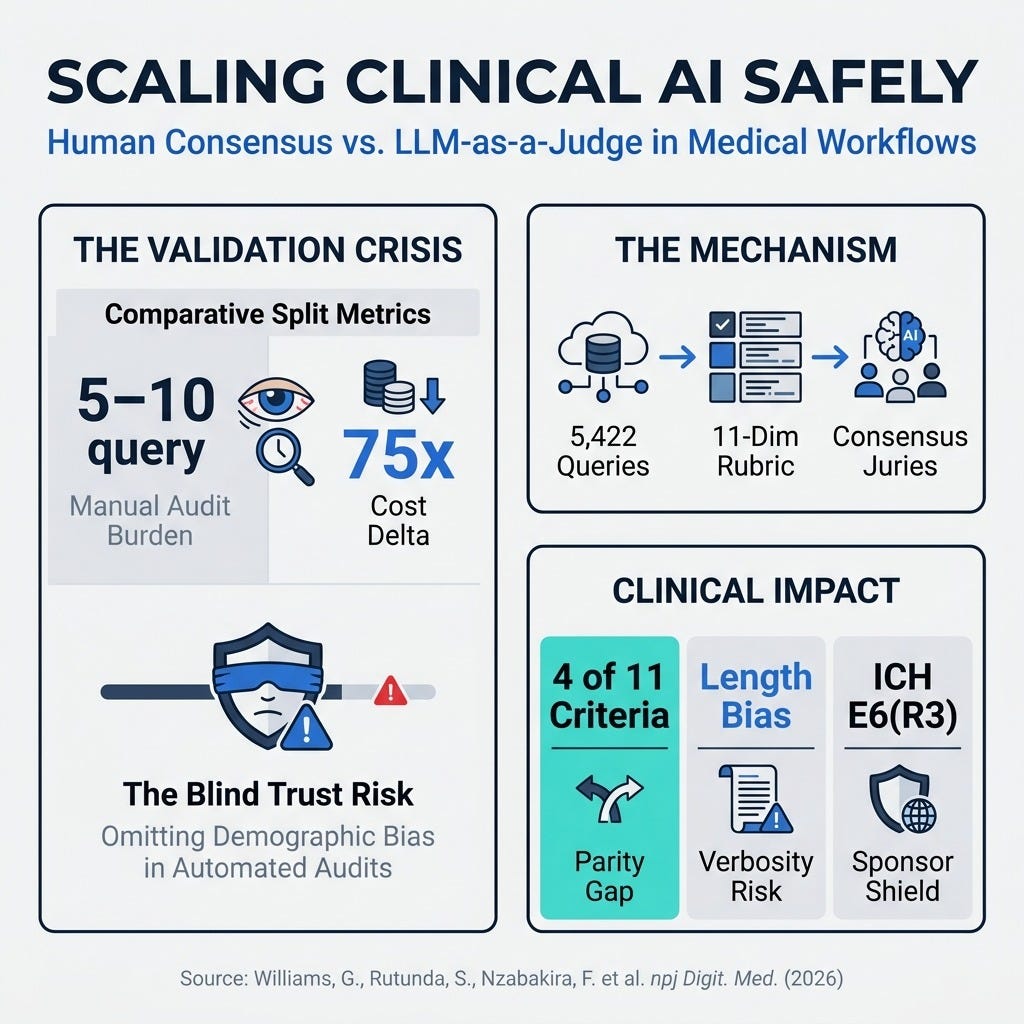
The Core Bottleneck: Manual rater audits cost $5–10 per query and delay database lock cycle times past 55 days, while unvalidated model-judges introduce severe regulatory compliance risks under ICH E6(R3).
The System Shift: Evaluating five large language model judges against six human clinicians across 3,000 bilingual responses revealed that models matched human consensus on only four of eleven criteria and exhibited absolute blindness to demographic bias.
Strategic Takeaway: Sponsors hold a non-delegable burden for data integrity and must build internal human-in-the-loop oversight rather than outsourcing validation to unguided algorithms.
AI Digital Pathology in MASH Trial Progression — [9 Minute Read]
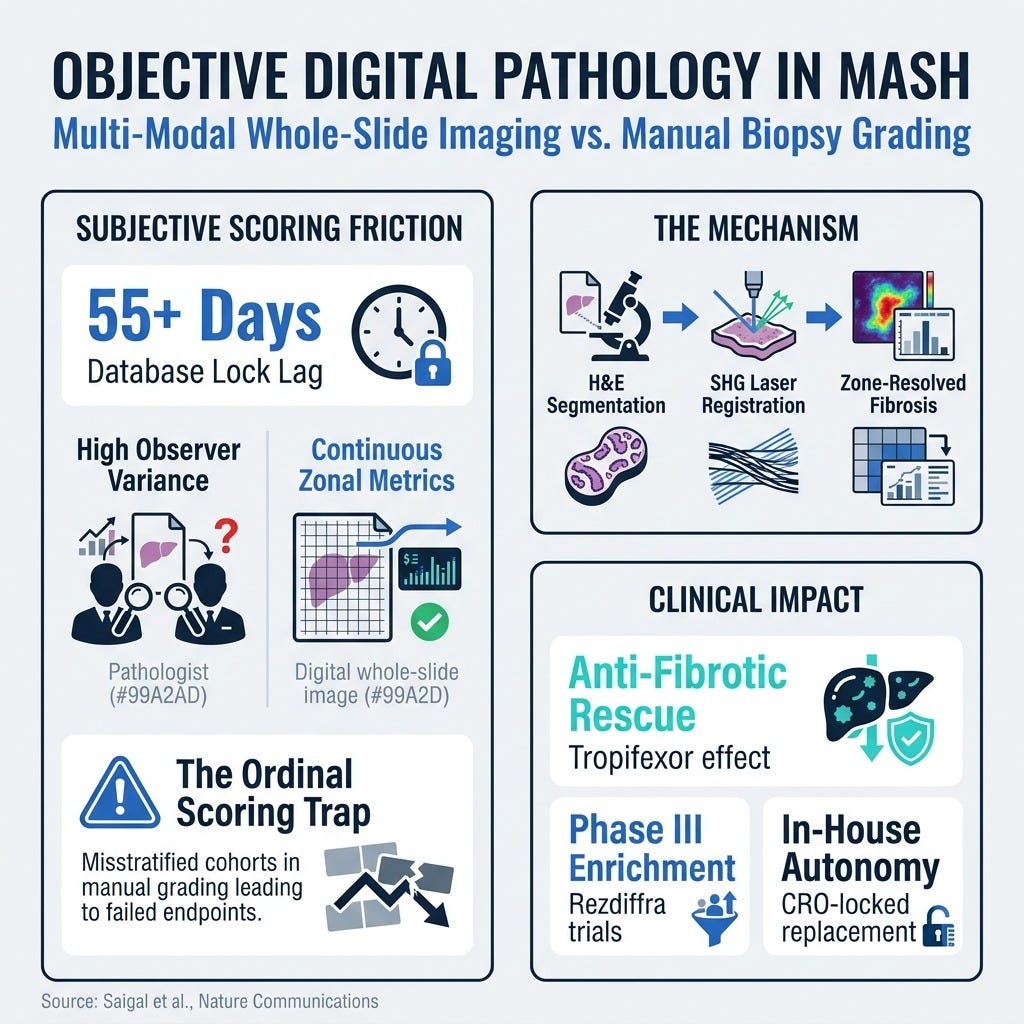
The Core Bottleneck: Subjective manual pathologist grading on liver biopsies introduces high inter-observer variability, masking compound efficacy and forcing Phase III protocol amendments that cost $535,000 and cause 3-month delays.
The System Shift: Co-registering H&E staining with Second Harmonic Generation imaging mapped zone-resolved co-localization of fibrosis and steatosis, uncovering anti-fibrotic drug effects that conventional pathology missed.
Strategic Takeaway: Building native digital pathology capabilities replaces variable biopsy scoring with continuous metrics, protecting pipeline asset valuation.
Mavacamten in Adolescents with Obstructive HCM — [6 Minute Read]
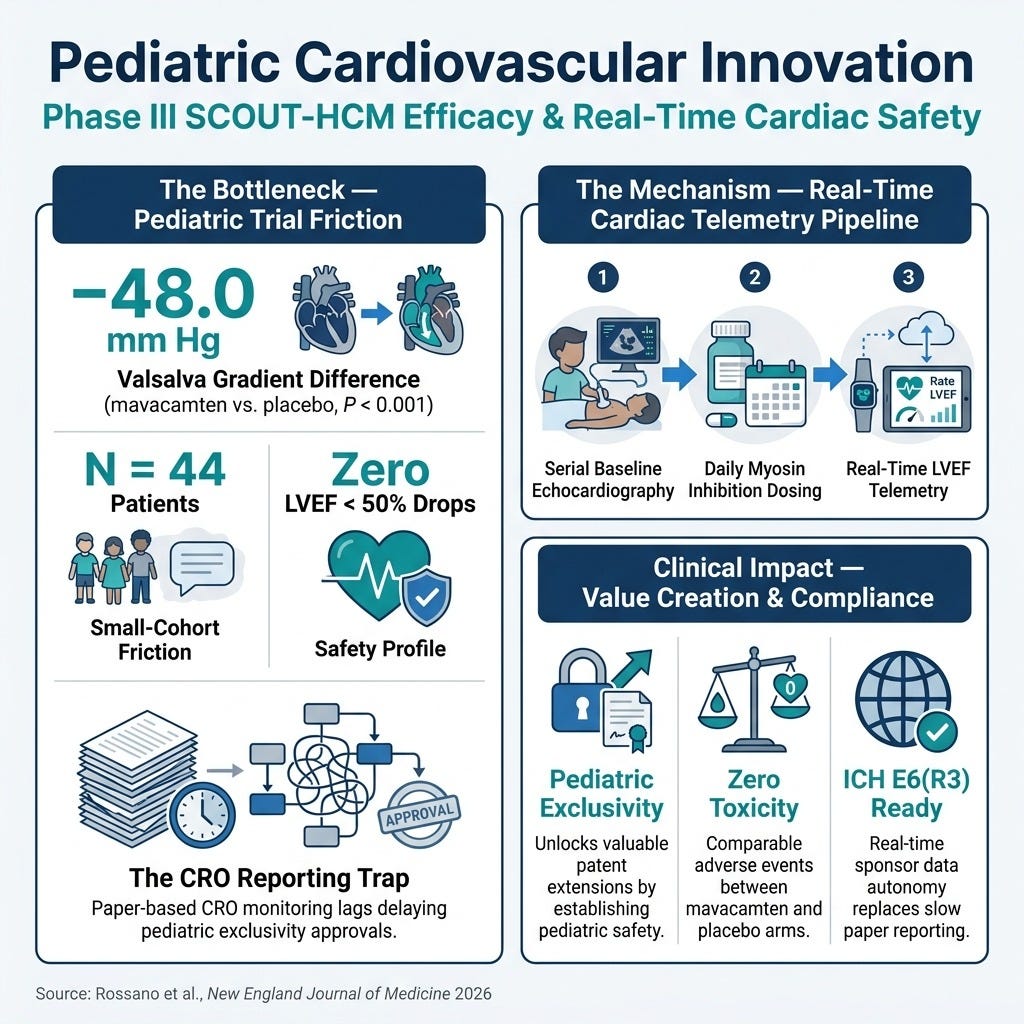
The Core Bottleneck: Pediatric cardiovascular trials face extreme recruitment friction across small cohorts, where paper-based safety monitoring delays critical signal detection.
The System Shift: A Phase III trial in 44 adolescents demonstrated that oral mavacamten achieved a -48.0 mm Hg Valsalva pressure gradient reduction over placebo with zero safety-driven drops in ejection fraction below 50%.
Strategic Takeaway: Real-time safety tracking requires sponsors to own their diagnostic data flows natively rather than depending on slow vendor reporting loops.
Bridging the Translation Gap in Whole-Slide Pathology — [8 Minute Read]
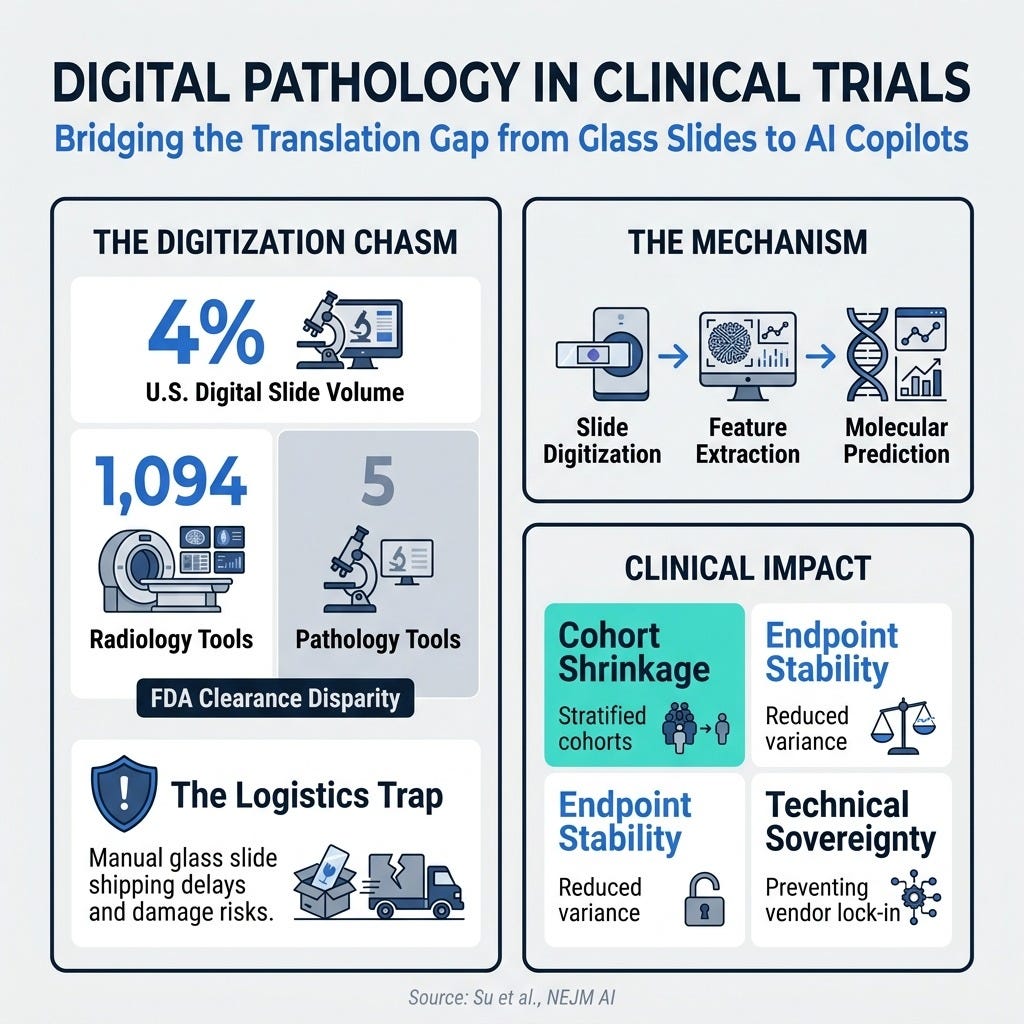
The Core Bottleneck: Only four percent of U.S. pathology slides are read digitally, leaving clinical trials dependent on slow manual glass-slide shipments that extend database lock cycle times past 55 days.
The System Shift: Deploying whole-slide image models as digital copilots extracts molecular insights directly from routine H&E stains, allowing sponsors to run smaller, highly stratified trial cohorts.
Strategic Takeaway: In-house whole-slide analysis workflows eliminate vendor lock-in, secure data autonomy, and maintain strict ICH E6(R3) compliance.
The 7-Pillar AI Readiness Playbook for Biopharma R&D
R&D teams frequently celebrate completing the first 70% to 80% of a digital pilot, only to hit a wall during the final 20% to 30%. In regulated clinical environments, this final stretch—where every dataset must satisfy regulatory compliance, data management standards, and site-level workflows—demands immense precision. Rushing early implementation creates false momentum and forces expensive downstream rework.
To prevent technology pilots from dying at the execution, leadership teams must move away from ad-hoc tools and evaluate their operational readiness across seven core pillars before allocating capital:
1. The Problem: Where Should We Focus? Distinguish between executive dashboard interest and actual site-level administrative relief. Resolve the buyer-versus-user mismatch before funding: if a tool adds data entry steps for clinical research coordinators without simplifying their daily tasks, it will be abandoned at the site level.
2. The Value: What is the ROI? Define hard, quantifiable success metrics up front. Target true operational choke points, such as eliminating $535,000 Phase III protocol amendments, compressing 55-day database lock delays, or removing manual annotation backlogs.
3. The Data: Is Our Foundation Ready? Audit physical infrastructure and data governance before licensing software. Buying advanced AI models is useless if global clinical sites are still physically mailing glass slides across borders because only 4% of slide volume is digitized. Standardize data pipelines for complex digital endpoints before attempting model deployment.
4. The Approach: How Do We Start? Overcome the “Last 20–30%” regulatory completion barrier by designing MVPs that incorporate compliance, validation, and auditability from day one, rather than trying to patch compliance onto a finished pilot.
5. The People: Do We Have the Skills? Address the governance void where 68.8% of clinical institutions operate without dedicated data quality managers. Transition away from isolated, ad-hoc chatbots used by individual power users toward harmonized, cross-functional clinical scrums.
6. The Culture: How Do We Manage Change? Prevent cognitive fatigue and coordinator alert fatigue by designing human-AI teaming workflows. Structure interaction so clinicians receive auditable, source-traced model rationales that build trust and streamline decision-making.
7. The Ethics: Are We Responsible? Uphold the sponsor’s non-delegable burden under ICH E6(R3). With out-of-the-box LLM model-judges exhibiting absolute blindness to demographic bias, sponsors must implement mandatory human-in-the-loop oversight to ensure patient safety and ethical accountability.
Want to benchmark your organization’s readiness across these seven domains?
Run your 5-minute self-assessment on our interactive AI-Check Tool at https://sentienthlth.com/tools/ai-readiness-checklist
How is your leadership team evaluating its readiness across these seven pillars? Hit reply and let me know.
PS...If you're enjoying Healthtech for Lifescience Leaders, please consider referring this edition to a friend.
And whenever you are ready, here are ways I can help you:
The AI-Augmented Leader Email Course: Sign-up for my free 5-day email course on how to become an AI Augmented Leader in Lifesciences.
Advisory & Executive Diagnostics: Audit your current AI initiatives and eliminate “Random Acts of Intelligence.” Book time on my calendar to discuss this further.
Workshops & Capability Building: Hands-on sessions for leadership teams to build scalable AI systems. Examples shared from systems I have personally built. Book time on my calendar to discuss this further.
September 4 - HealthTech Dose
September 4, 2026
This episode focuses on the high-stakes execution of automated clinical trial oversight and compliance. Driven by ICH E6R3 guidelines, trial sponsors are turning to technology to manage overwhelming volumes of clinical data. While replacing $9.17 manual queries with 12-cent LLM-as-a-judge audits appears cost-effective, sponsors face a critical legal trap: under 21 CFR 312.52 and international regulations, trial quality and safety accountability remain a non-delegable burden that falls entirely on the sponsor. Through empirical benchmarks and clinical trial comparisons, the hosts unpack why autonomous AI cannot replace human judgment in complex clinical scenarios—such as emergency unblinding or on-site Source Data Review (SDR)—and advocate for a hybrid “systems citizenship” framework.
Key Takeaways:
Non-Delegable Sponsor Liability: Recognize that regulatory compliance under ICH E6R3 and 21 CFR 312.52 cannot be delegated to software vendors, leaving sponsors legally on the hook for AI hallucinations or missed safety signals.
SDV vs. SDR Distinction: Leverage AI for high-volume Source Data Verification (transcription checking), but reserve human clinicians for Source Data Review (evaluative, on-site detective work).
Beware LLM Benchmarking Flaws: Recognize critical vulnerabilities in LLM-as-a-judge systems identified in recent research, including demographic blindness, language degradation, and length bias (Gemini OR 3.38, Claude OR 2.57) that mistakes verbosity for clinical accuracy.
Avoid Custom Model Drift: Avoid deploying independent custom AI models across global trial sites, which risks introducing uncontrolled confounding variables and ruining endpoint interpretability.
Human-Led Clinical Rigor: Benchmark trial success against human-led evidence, such as the Rossano et al. Phase III Scaliu-TGCM trial, which achieved a dramatic -48.5 mmHg LVOT pressure gradient reduction in pediatric HCM without AI reliance.
Adopt Systems Citizenship: Implement a hybrid human-in-the-loop architecture that uses AI as a triage tool rather than an autonomous judge, avoiding perverse incentives where staff pad notes with fluff to satisfy algorithms.
Show Notes:
[0:00 - 1:02]: Introduction to HealthTech Dose and the core dilemma: comparing an expert human clinical query ($9.17) against a 12-cent LLM agent during severe adverse event oversight.
[1:02 - 3:57]: The impact of ICH E6R3 guidelines and 21 CFR 312.52 on sponsor liability, demonstrating why quality accountability cannot be delegated to software vendors.
[3:57 - 6:32]: Addressing sponsor-imposed administrative waste (e.g., unnecessary Form FDA 1572 re-signings) and why AI binary logic fails complex clinical calls like emergency unblinding.
[6:32 - 9:13]: Navigating EHR entropy by defining the operational distinction between Source Data Verification (transcription checking) and Source Data Review (on-site detective work).
[9:13 - 12:31]: Key findings from the Williams et al. study on LLM-as-a-judge models: contrasting 0.32 human inter-rater agreement with AI flaws like length bias, demographic blindness, and cost spikes.
[12:31 - 16:21]: Why decentralized custom AI models ruin endpoint interpretability, contrasted with the human-led rigor of the Rossano et al. Phase III Scaliu-TGCM trial for Mavacamten in pediatric HCM.
[16:21 - 22:05]: Establishing a “systems citizenship” hybrid architecture, using AI for SDV triage, and warning against Goodhart’s law where staff pad notes with fluff to satisfy algorithms.
Podcast generated with the help of Gemini Notebook.
Sources:
Williams G, Rutunda S, Nzabakira F, Mateen BA. Human evaluators vs. LLM-as-a-Judge: toward scalable evaluation of GenAI in global health. npj Digital Medicine 2026.
Rossano JW, Canter C, Wolf CM, Papez A, Gambra M, Bryant RM, Alejos J, McCulloch M, Sarquella Brugada G, Bock MJ, Jeewa A, Pearce FB, Desai MY, Favatella N, Javidialsaadi Atefeh, Phung V, Rano T, Zhu L, Dyme JL, Mital S. Mavacamten in Adolescents with Obstructive Hypertrophic Cardiomyopathy. New England Journal of Medicine 2026;395(4):362-373.
Su F-Y, Marostica E, Wang X, Yang S, Chiang J-H, Ogino S, Golden JA, Kather JN, Qiu Y, Chen D, Schnitt S, Yu K-H. Bridging the Gap — Translating AI in Pathology into Clinical Impact. NEJM AI 2026;3(8).
Saigal A, Abdurrachim D, Tso E, Hendra C, Ong CZL, Kimball S, Blumenschein W, Liu Y, Jiang X, Sanyal AJ, Ali AAB, Talukdar S. AI digital pathology as a key tool providing in-depth understanding of the progression and regression of MASH and fibrosis in male mouse models. Nature Communications 2026;17:6964.
Data Autonomy vs. CRO Replication in Biopharma R&D
September 1, 2026
HT4LL-20260901
Pharma R&D sits on a multi-billion dollar clinical data goldmine, but most of it remains trapped in legacy software silos.
For too long, sponsors have focused investments internally, building massive data lakes to clean up messy datasets downstream. This retroactive approach fails to secure high-quality data at the source, driving protocol amendments and operational delays.
Here is what we are covering today:
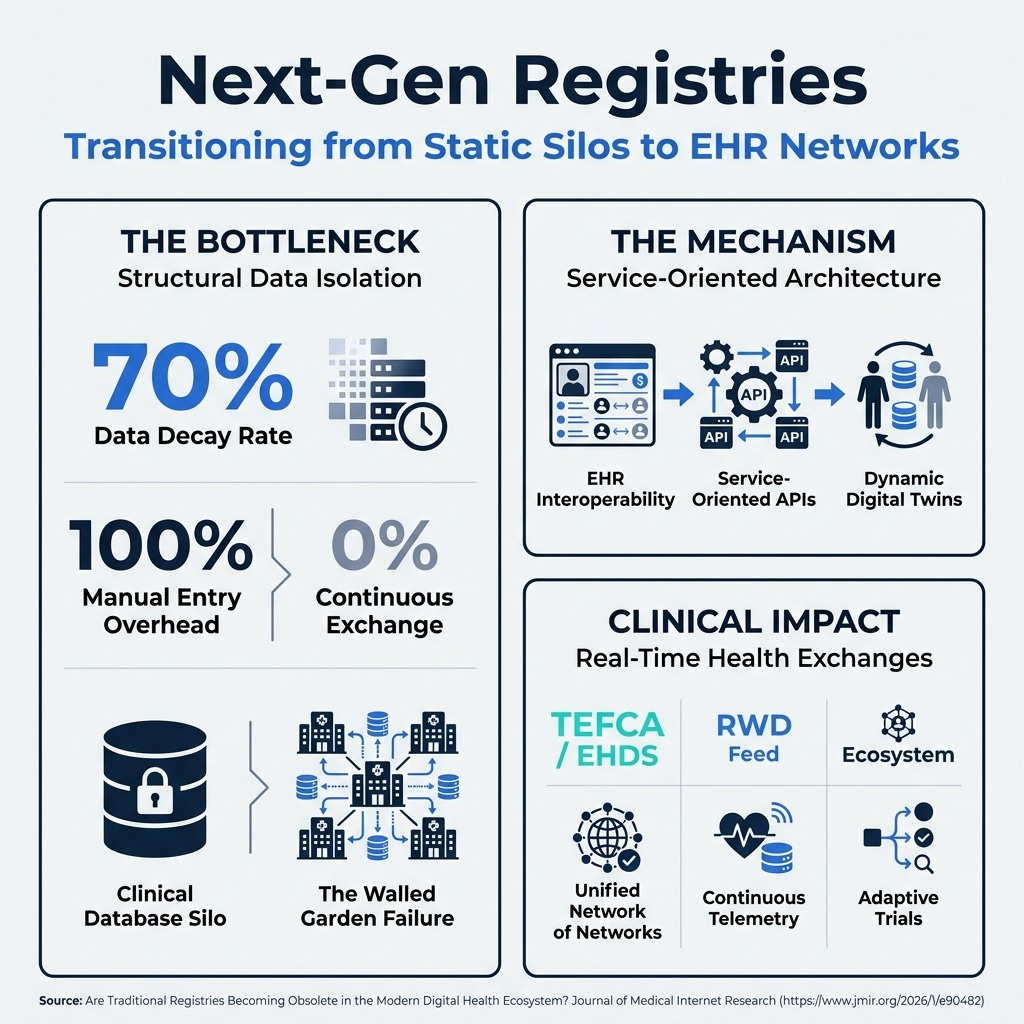
Standards over Silos: Why traditional, isolated registries are facing rapid obsolescence in connected health networks.
Point-of-Capture Metrics: How to stop retroactive cleaning toil and establish active, real-time data governance.
The Patient-Centric Source: Reclaiming your clinical trial data assets to build long-term tech autonomy.
Weekly Resource List:
Are Traditional Registries Becoming Obsolete in the Modern Digital Health Ecosystem? — [5 Minute Read]
The Core Bottleneck: Traditional clinical registries operate as isolated, manual repositories that rely on static database structures.
The System Shift: Modern regulations like the European Health Data Space (EHDS) shift control from static databases to patient-managed EHR networks.
Strategic Takeaway: Sponsors must transition from static databases to active, service-oriented software stacks to maintain compliance.
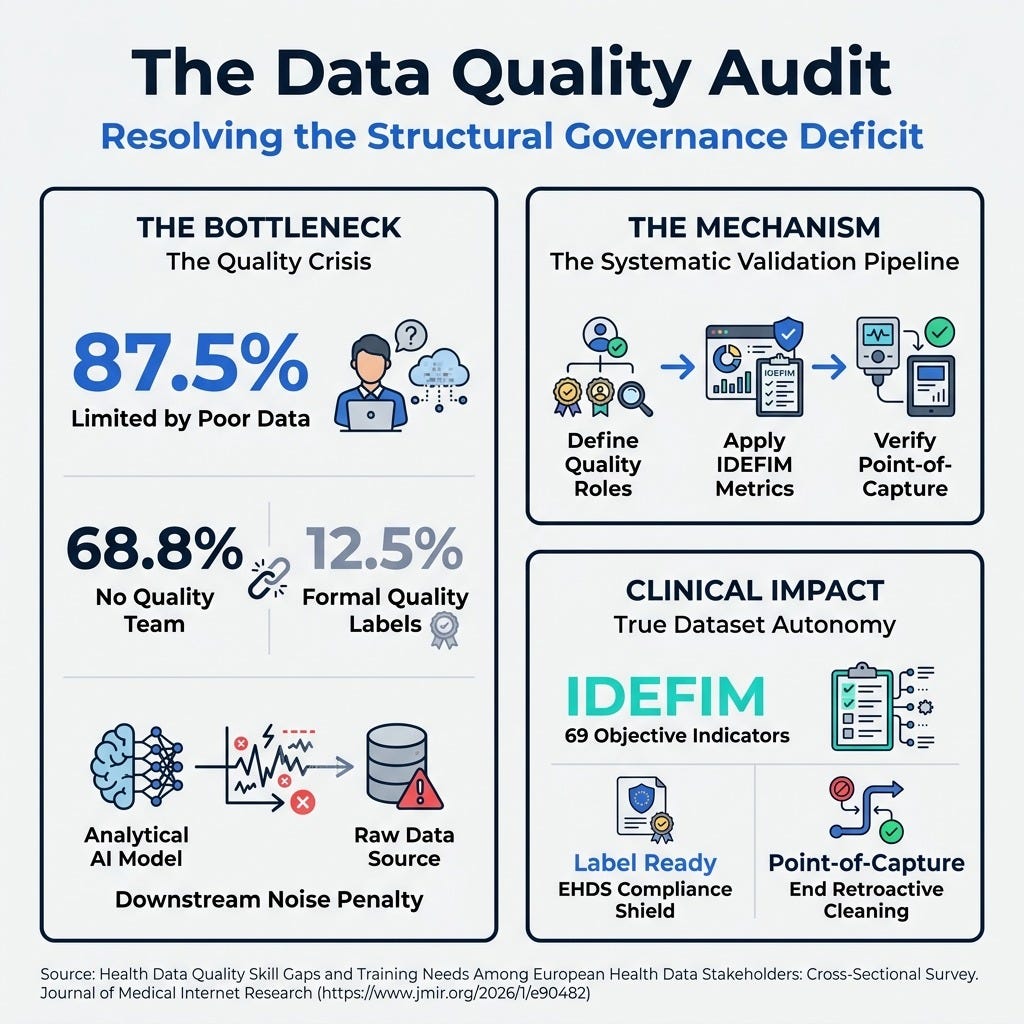
Health Data Quality Skill Gaps and Training Needs Among European Health Data Stakeholders — [6 Minute Read]
The Core Bottleneck: Vague role definitions and a lack of dedicated data quality teams limit the effectiveness of over 87% of health data professionals.
The System Shift: A comprehensive survey shows that 68.8% of clinical institutions operate without a dedicated data quality manager or team, proving quality is a governance deficit.
Strategic Takeaway: Protecting clinical assets requires establishing dedicated internal data quality roles and automated point-of-capture metrics rather than outsourcing governance.
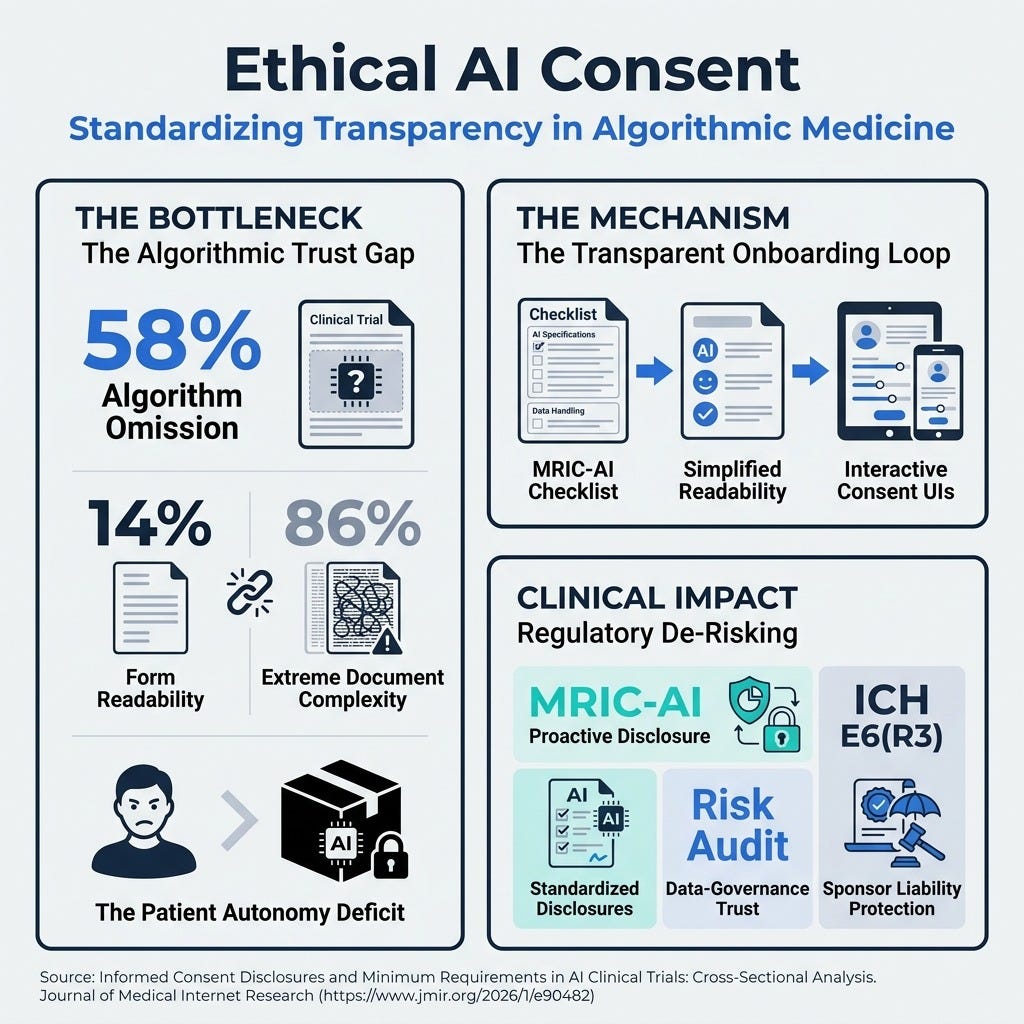
Informed Consent Disclosures and Minimum Requirements in AI Clinical Trials — [5 Minute Read]
The Core Bottleneck: Opaque informed consent documents fail to disclose algorithmic specifications, creating clinical trust deficits and regulatory liabilities.
The System Shift: An analysis of clinical trials reveals that 58% of forms hide their AI type and only 14% meet basic readability standards.
Strategic Takeaway: Implementing standardized ethical checklists like the MRIC-AI framework is a critical prerequisite to de-risking algorithmic trials.
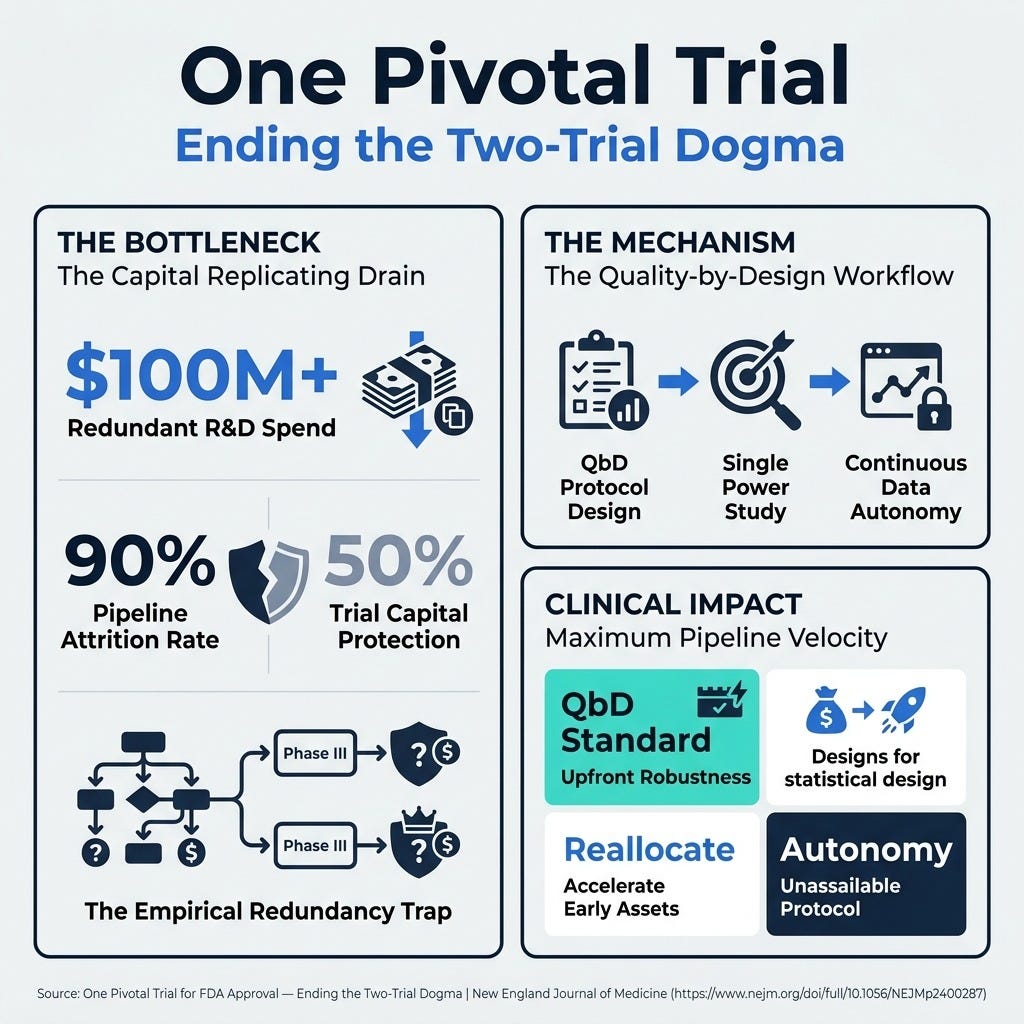
One Pivotal Trial for FDA Approval — Ending the Two-Trial Dogma — [4 Minute Read]
The Core Bottleneck: Outdated regulatory dogmas requiring two identical phase III trials cost sponsors hundreds of millions in redundant R&D budgets.
The System Shift: Transitioning to single pivotal trials is clinically viable when protocols are designed with absolute statistical safety using Quality-by-Design standards.
Strategic Takeaway: Ending clinical trial replication requires building internal analytics capabilities to design highly powered protocols.
Building Patient-Centric Data in Biopharma R&D
During its restructuring, Spirit Airlines realized its customer loyalty database was more valuable than its physical fleet of planes. At Epic Systems, I saw how patient-centric data architecture built Cosmos, one of the world’s largest clinical datasets. Sponsors must bring this patient-centric thinking to study designs, treating data as a primary asset rather than a secondary administrative task.
Your CROs are key partners, but you cannot expect them to build your internal digital strategy. Biopharma repeatedly pours millions into internal data lakes to clean up messy datasets downstream. This retroactive cleaning is an expensive ambulance-at-the-bottom-of-the-cliff approach. Why is it that pharma chose not to build a pseudonymized patient-centric data foundation based on all the clinical trials they have run?
When we look at our trial sites today, the data-capture infrastructure is structurally broken. A cross-sectional survey by Declerck J, et al. reveals that 87.5% of health data professionals are actively limited by poor-quality datasets. The root cause is a deep structural deficit: 68.8% of clinical institutions operate without a dedicated data quality manager or team.
Data quality is orphaned at the source, which makes it challenging to expect clean data to flow downstream for further analysis [10]. Now, consider clinical trials integrating artificial intelligence. Su H, et al. found that 58% of AI-driven trials fail to disclose basic algorithmic specifications in consent documents. Furthermore, only 14% of these consent forms meet basic standards for readability.
This creates a severe clinical trust deficit and massive regulatory liability. If sponsors want to operationalize the power of GenAI, they need to ensure the data from the source is of high quality. Sponsors must equip their internal teams with the capabilities to automate mundane, time-consuming data cleaning and processing tasks - preferably at the source the data is collected.
The 3-Step Site Audit:
To begin this transition, executive teams must immediately audit their current data pipelines to identify and resolve data quality gaps.
First, map data velocity: calculate the median timestamp difference between patient visits and first entry on your EDC audit trail, checking if lag exceeds 10 days or queries sit unresolved for over 30 days.
Second, review point-of-capture metrics: verify if programmatic “edit checks” are hardcoded into data entry screens to flag contradictions, ending manual, late-stage retroactive cleaning.
Third, verify schema ownership: request weekly transfers of raw database schemas and audit logs to confirm on-demand access without custom change-orders.
How are you leading the way to lay the foundation to build sustainable, internal digital health and AI capabilities that will enable you to compete in a world where every other competitor will be using AI to try to differentiate?
PS...If you're enjoying Healthtech for Lifescience Leaders, please consider referring this edition to a friend.
And whenever you are ready, here are ways I can help you:
The AI-Augmented Leader Email Course: Sign-up for my free 5-day email course on how to become an AI Augmented Leader in Lifesciences.
Advisory & Executive Diagnostics: Audit your current AI initiatives and eliminate “Random Acts of Intelligence.” Book time on my calendar to discuss this further.
Workshops & Capability Building: Hands-on sessions for leadership teams to build scalable AI systems. Examples shared from systems I have personally built. Book time on my calendar to discuss this further.
August 28 - HealthTech Dose
August 28, 2026
This episode dives directly into the operational, ethical, and regulatory friction hindering clinical AI deployment—a phenomenon known as the clinical AI translation gap. While advanced deep learning models and large language models (LLMs) demonstrate impressive raw metrics in tumor detection and EHR risk scoring, bringing them into hospital wards and trial sites introduces severe challenges. To navigate this gap, clinical leaders must balance technical innovation with patient safety by addressing three critical pillars: biological validation (distinguishing visual phenotypic correlates from ground-truth tissue pathology), contextual accuracy (overcoming EHR data quality entropy to avoid catastrophic LLM parsing errors), and systems citizenship (reconciling localized model adaptation with rigid global regulatory standards). Realizing AI’s potential requires moving away from unverified automation toward embedded transparency and strict human oversight.
Key Takeaways
Distinguish Phenotypic Correlates from Ground Truth: High diagnostic accuracy metrics (e.g., MULLET increasing AUC from 0.8188 to 0.9268) often reflect visual proxies rather than undeniable genomic or histopathological facts. Relying on visual consensus instead of tissue biopsy risks severe iatrogenic harm from treatments like Transarterial Chemoembolization (TACE).
Mitigate EHR Data Quality Entropy: While LLMs like Qwen3-Next perform exceptionally on simple risk metrics (96% F1 score on the Padua VTE score), complex multi-variable clinical tasks (such as the 40-item Caprini score) cause model performance to collapse (F1 score plunging to 0.64, low-risk sensitivity dropping to 0.22).
Account for Liability Redirection: Under ICH E6(R3) guidelines, software vendors do not hold clinical liability. When LLMs lack clinical common sense—such as misinterpreting leg bandages as total paralysis—the burden shifts to clinicians, replacing administrative drag with high-stakes auditing toil.
Resolve the Standardization Paradox: Decentralized, locally fine-tuned AI models risk introducing confounding variables across international clinical trial sites. Global regulators (FDA, EMA, NMPA) demand frozen, uniform measurement tools to preserve trial endpoint integrity.
Prioritize Embedded Transparency Over Post-Hoc Heatmaps: Regulators are increasingly rejecting post-hoc explainability tools (SHAP, LIME, Grad-CAM) as unverified rationalizations. Future clinical AI architectures must natively flag internal uncertainty before triggering automated decisions.
Show Notes
[0:00 - 1:15] Introduction to the Clinical AI Translation Gap: Why headline-grabbing AI diagnostic breakthroughs hit operational and regulatory brick walls on the clinical front lines.
[1:15 - 3:35] Diagnostic Imaging vs. Biological Truth: Analyzing imaging models (DeepCT-MTM, MULLET) and explaining why visual shadows differ from verifiable tissue biology.
[3:35 - 6:35] Radiological Consensus & Verification Toil: Evaluating the ethical risks of bypassing biopsies for aggressive interventions like TACE, and how AI efficiency shifts work onto clinical audit teams.
[6:35 - 9:00] Administrative EHR Data Entropy: Examining Qwen3-Next on VTE risk scoring—highlighting the performance crash from simple Padua scores to complex 40-item Caprini evaluations.
[9:00 - 12:00] LLM Contextual Errors & Liability: How parsing errors (e.g., mistaking routine tracheostomies for major surgery or limb dressings for immobility) redirect legal liability onto human physicians under ICH E6(R3).
[12:00 - 15:10] Decentralized Fine-Tuning vs. Regulatory Standards: The conflict between hyper-localized training (using synthetic patient cohorts and digital twins) and multi-center regulatory comparability across global sites.
[15:10 - 17:15] Post-Hoc Explanation vs. Embedded Transparency: Why heatmaps (SHAP, LIME, Grad-CAM) fail regulatory checks and why native uncertainty flagging is mandatory for patient safety.
[17:15 - 18:58] Strategic Summary: Balancing Silicon Valley’s rapid iterative development with the uncompromising safeguards of human health care.
Podcast generated with the help of Gemini Notebook
Source Articles:
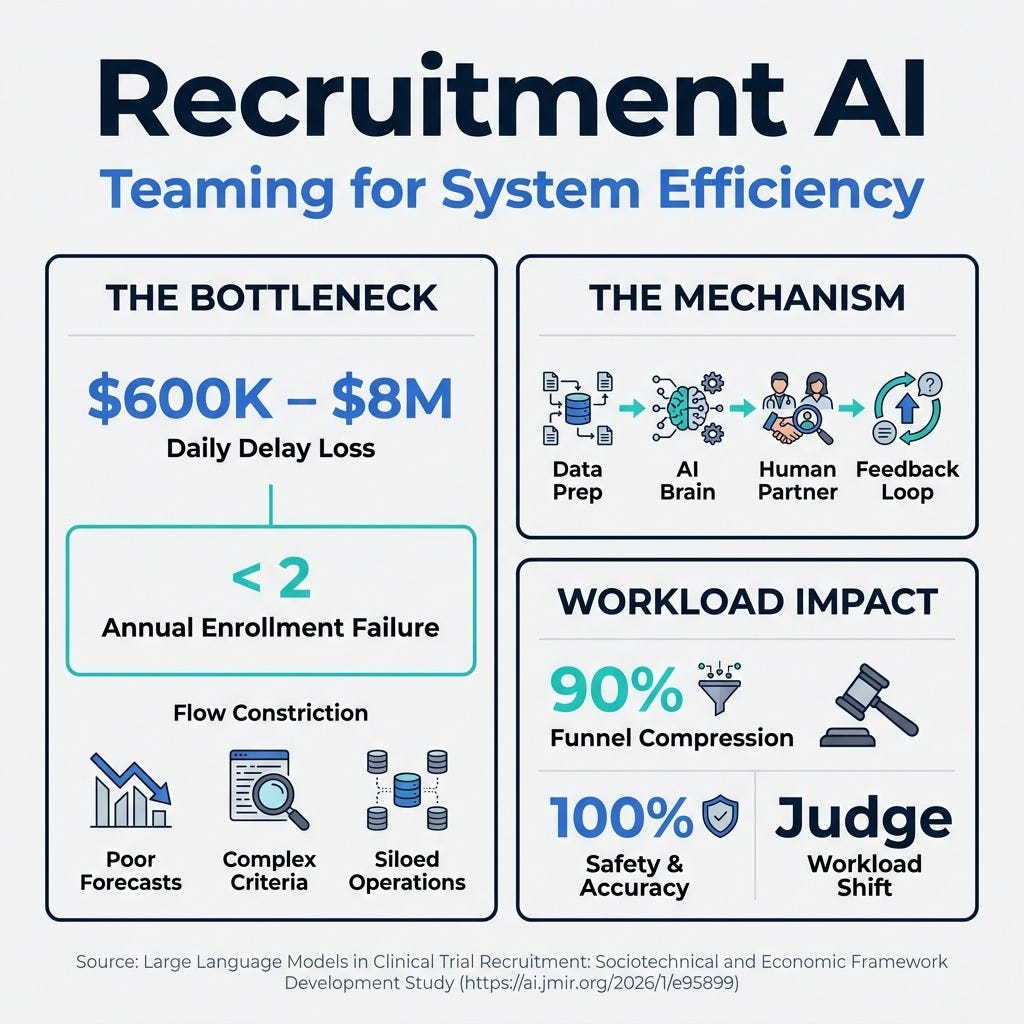
Accuracy vs. Trust: The Clinical AI Blindspot
August 25, 2026
HT4LL-20260825
Hey there,
Operationalizing clinical intelligence is an organizational trust-building mission, not a software deployment exercise.
R&D teams routinely over-index on predictive accuracy metrics while missing the behavioral realities and transaction costs that govern site-level adoption. When technical groups deploy systems in isolation, they build rigid tools that clinicians reject because the software clashes with day-to-day clinical practice.
To scale adoption, clinical operations leaders must audit real workflows, map operational cost variance, and give clinicians clear interface controls that provide the confidence to act.
Here is what we are covering today:
Sociotechnical Recruitment: Structuring AI matching as a closed-loop transaction system.
Regulatory AI Endpoints: Transitioning MASH trials to certified, automated tissue assessment.
Oncology Decision Support: Balancing guideline automation with multidisciplinary team judgment.
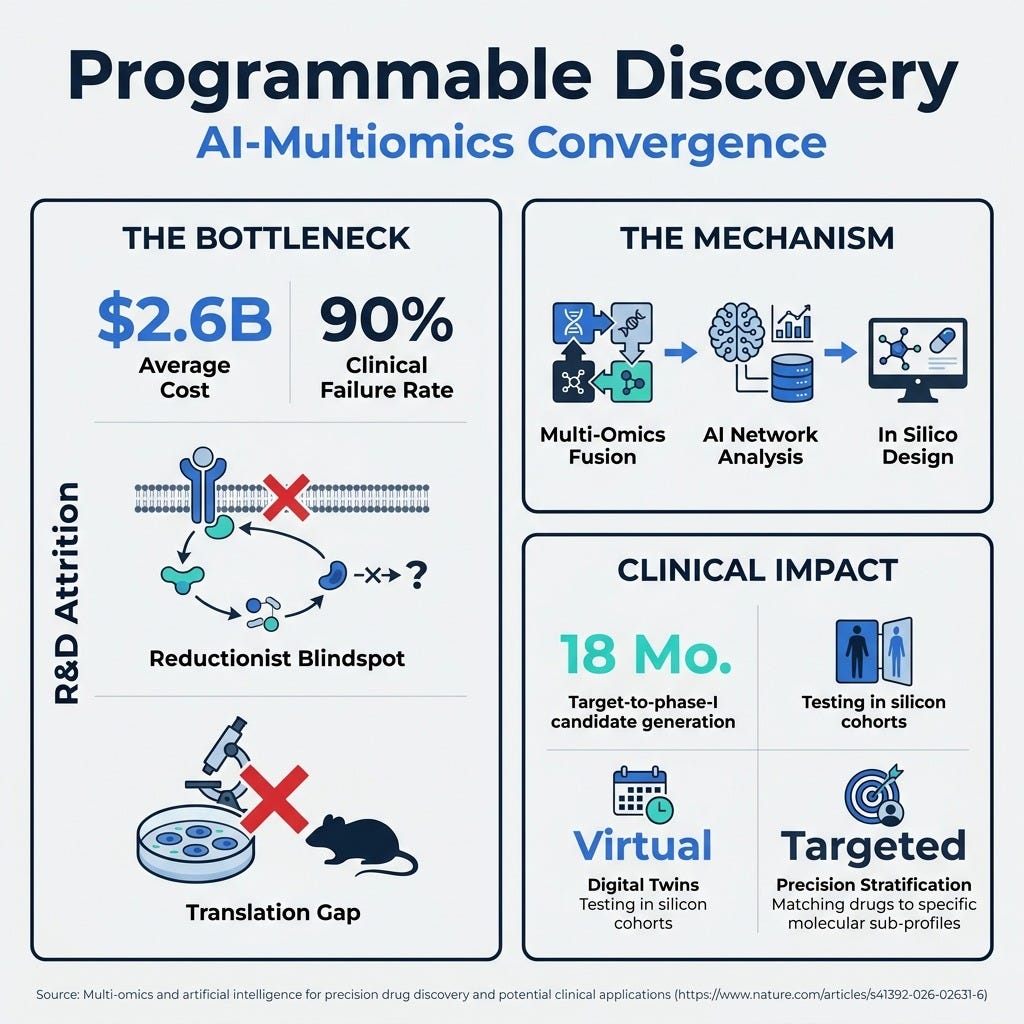
Network Multi-Omics: Updating precision drug discovery with dynamic pathway modeling.
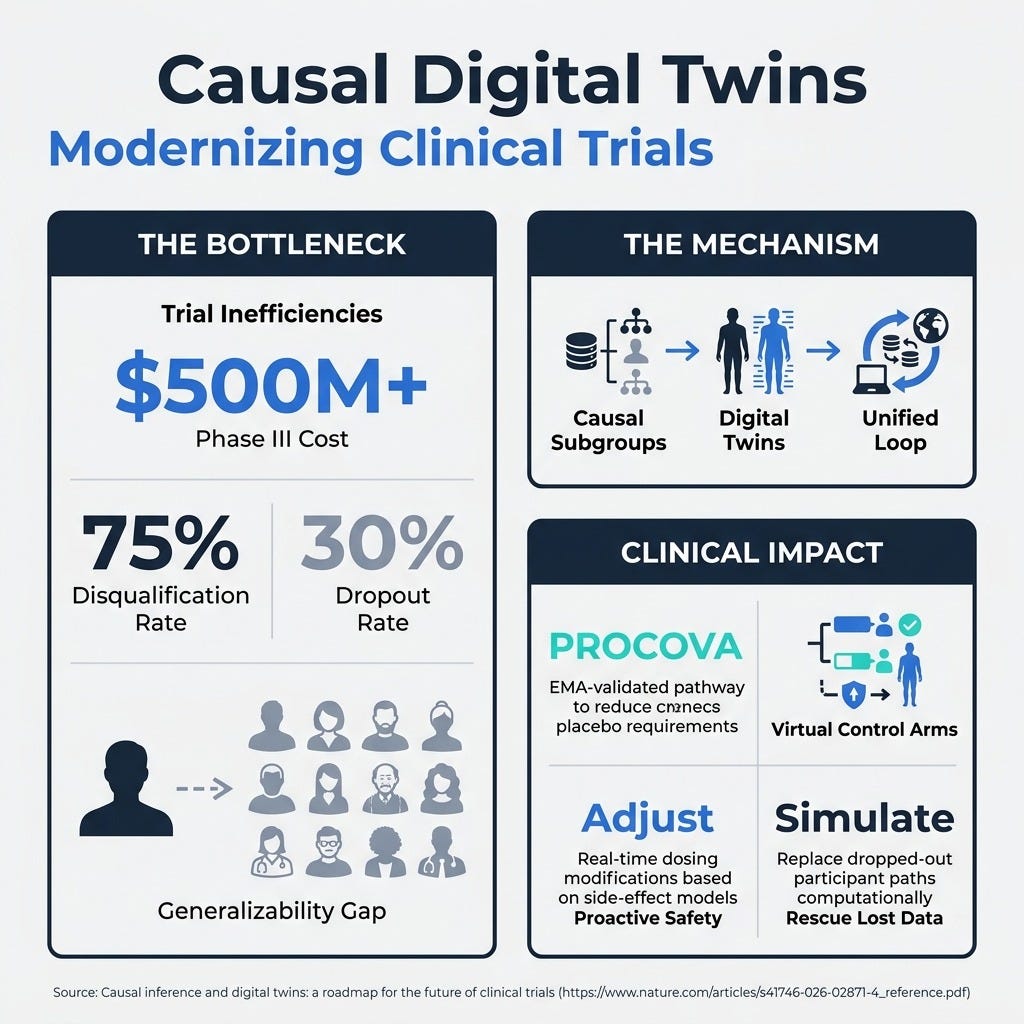
Causal Digital Twins: Modeling counterfactual patient trajectories to augment control arms.
Weekly Resource List:
Large Language Models in Clinical Trial Recruitment
The Core Bottleneck: Clinical trial recruitment stalls under the manual burden of parsing unstructured medical records against complex protocol criteria.
The System Shift: The LECRA framework converts recruitment into a closed-loop transaction pipeline. Zero-shot pipelines identify 90% of eligible candidates while reducing the manual search volume to 6% of the record corpus.
Strategic Takeaway: Treat model adoption as a sociotechnical contract. Prioritize clinician override controls and clear operational ROI over raw benchmark accuracy.
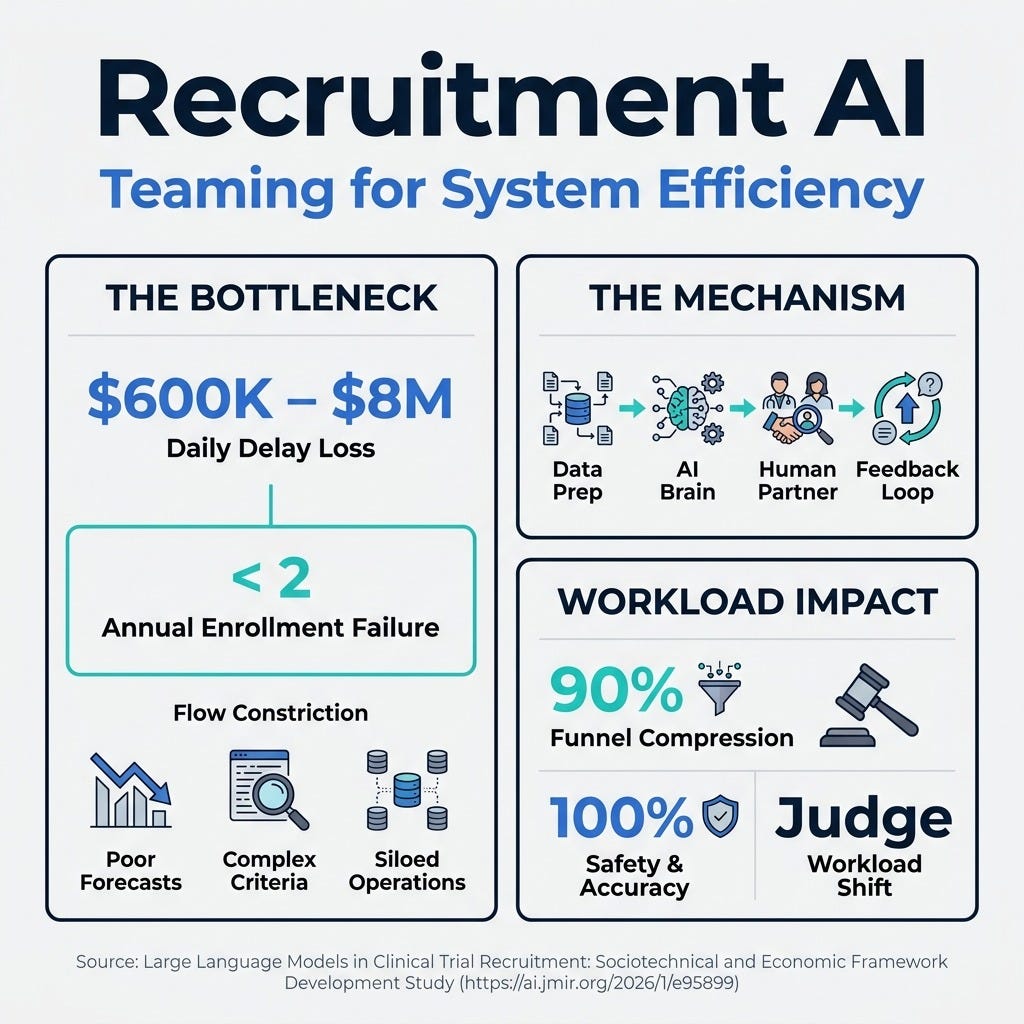
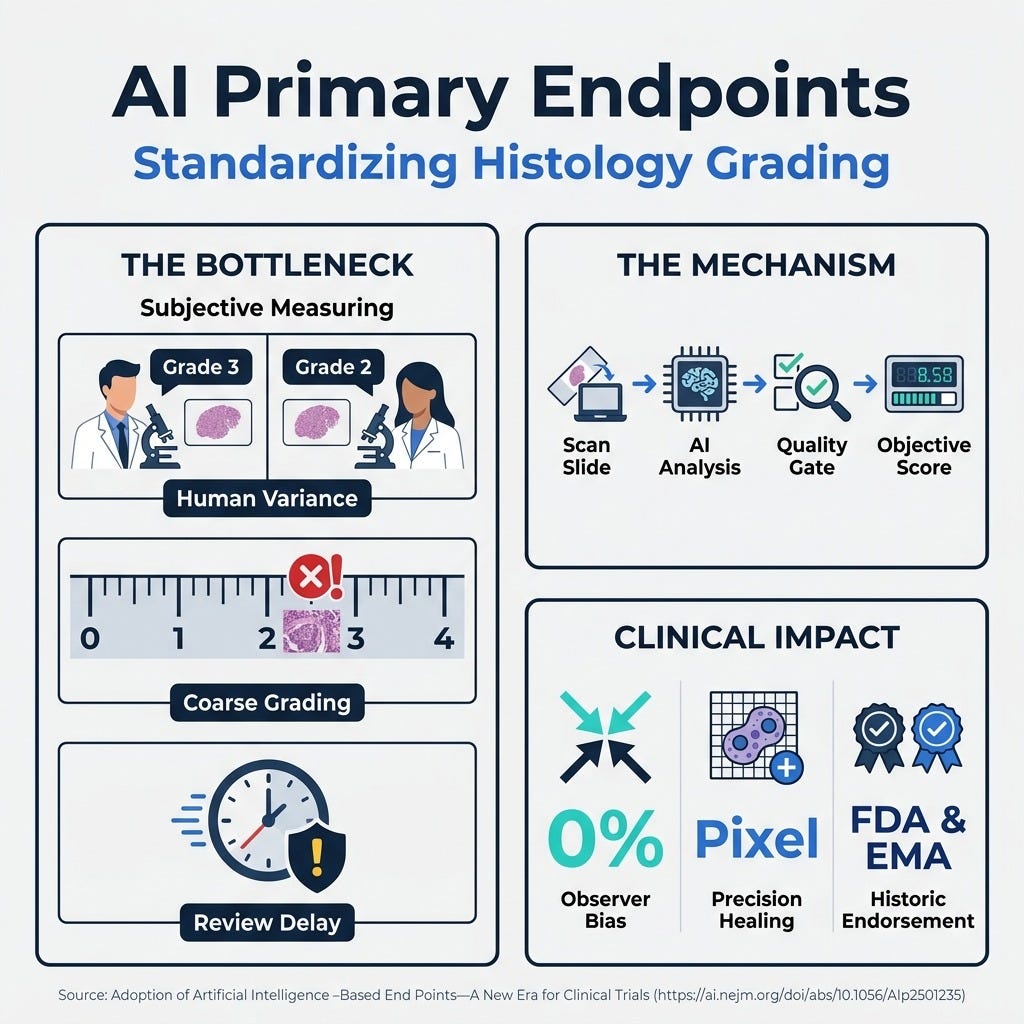
Adoption of AI-Based Endpoints
The Core Bottleneck: MASH trials rely on manual histologic scoring by pathologists, causing diagnostic variability and extended development timelines.
The System Shift: Joint qualification of the AIM-NASH platform by the FDA and EMA establishes an automated, cell-level tissue assessment standard as a certified primary endpoint.
Strategic Takeaway: Transition from manual reviewer coordination to validated quality-control pipelines capable of generating submission-grade regulatory endpoints.
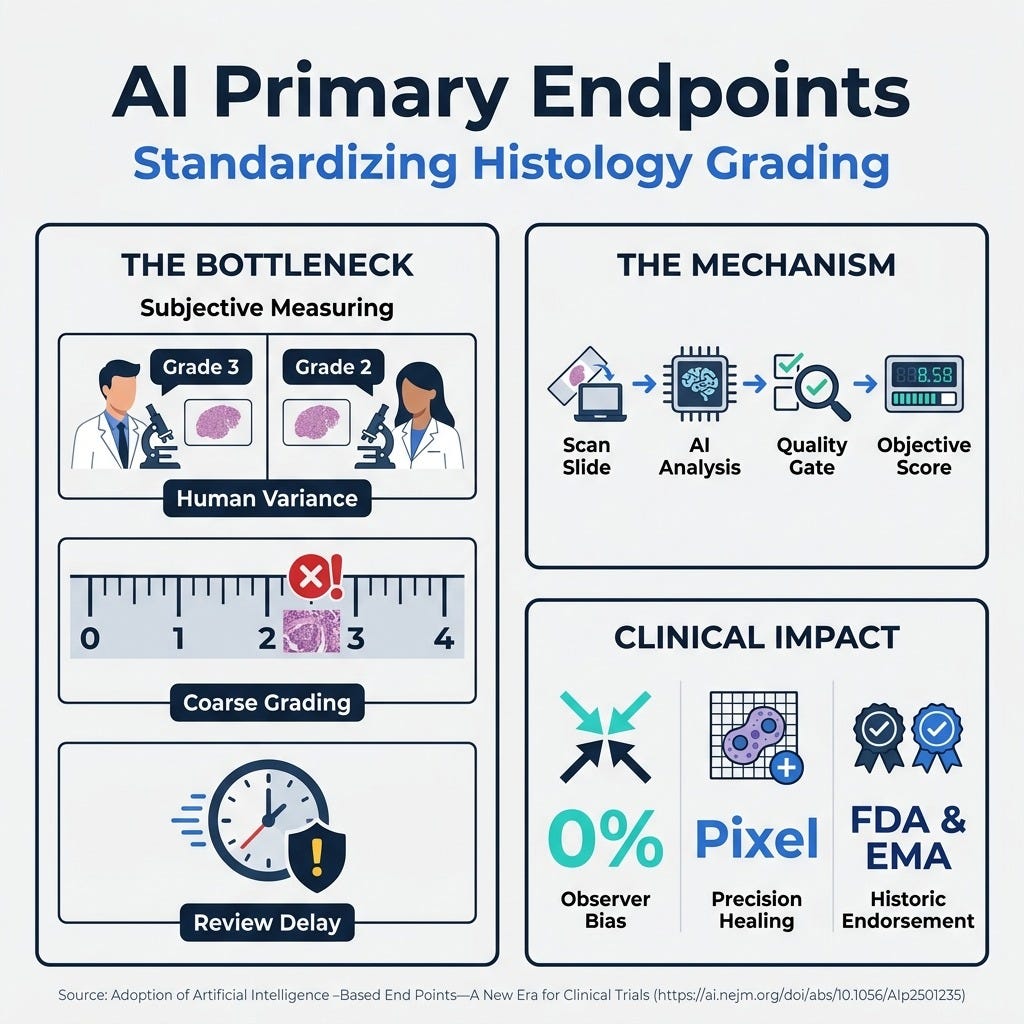
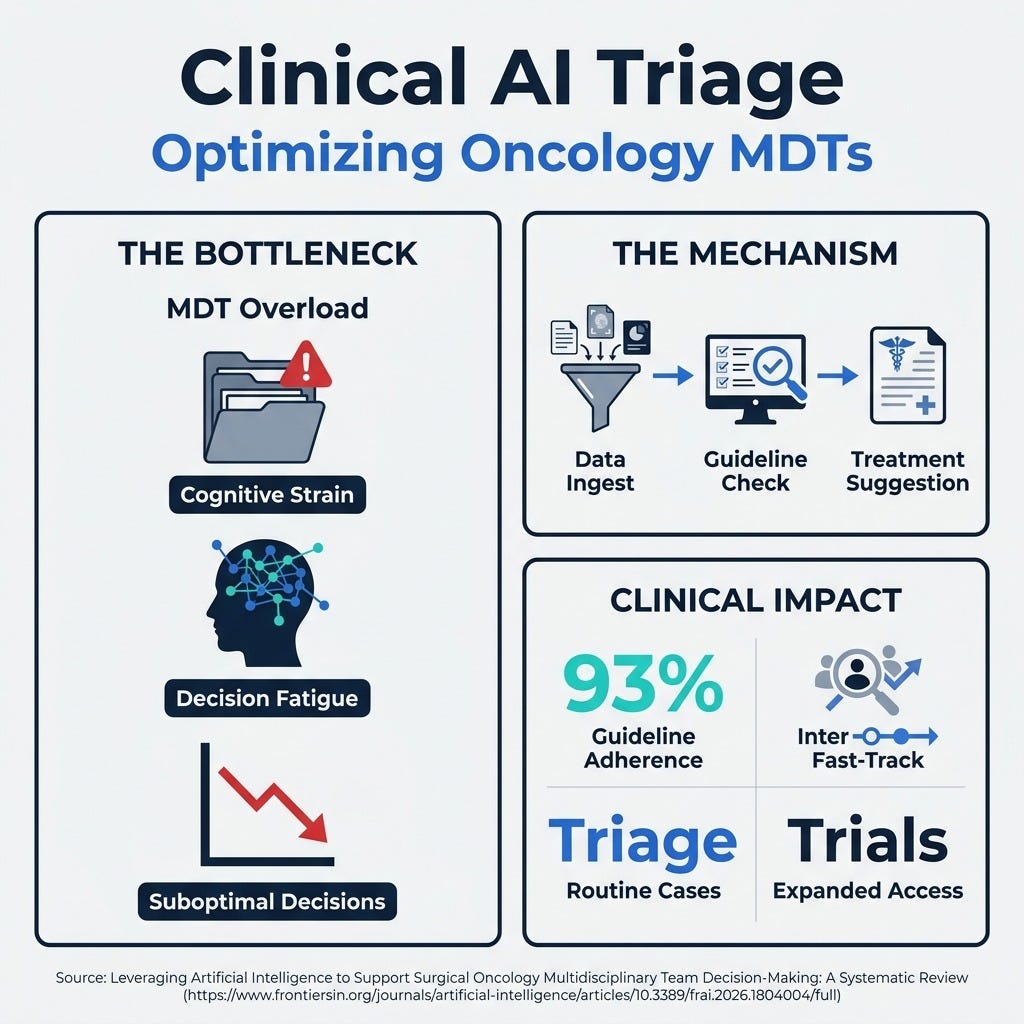
AI Decision Support in Surgical Oncology Multidisciplinary Teams
The Core Bottleneck: Increasing case volume and therapeutic complexity create cognitive fatigue across multidisciplinary tumor boards.
The System Shift: Evidence across 59 studies shows decision support tools reliably align with standard guidelines, though real-world concordance rates range from 23% to 99% depending on clinical nuance and institutional resources.
Strategic Takeaway: Deploy decision support systems strictly as an advisory baseline, shifting clinical teams from drafting initial plans to auditing machine-generated baselines.
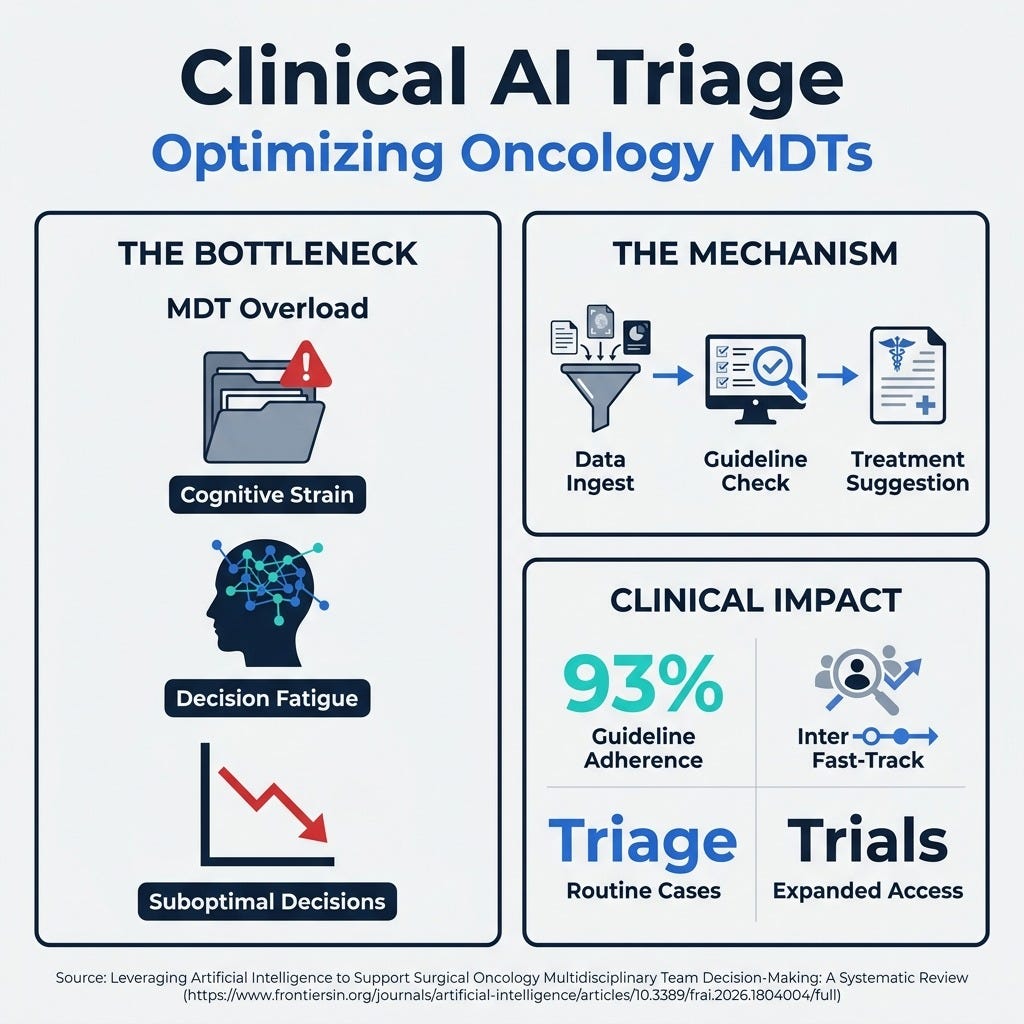
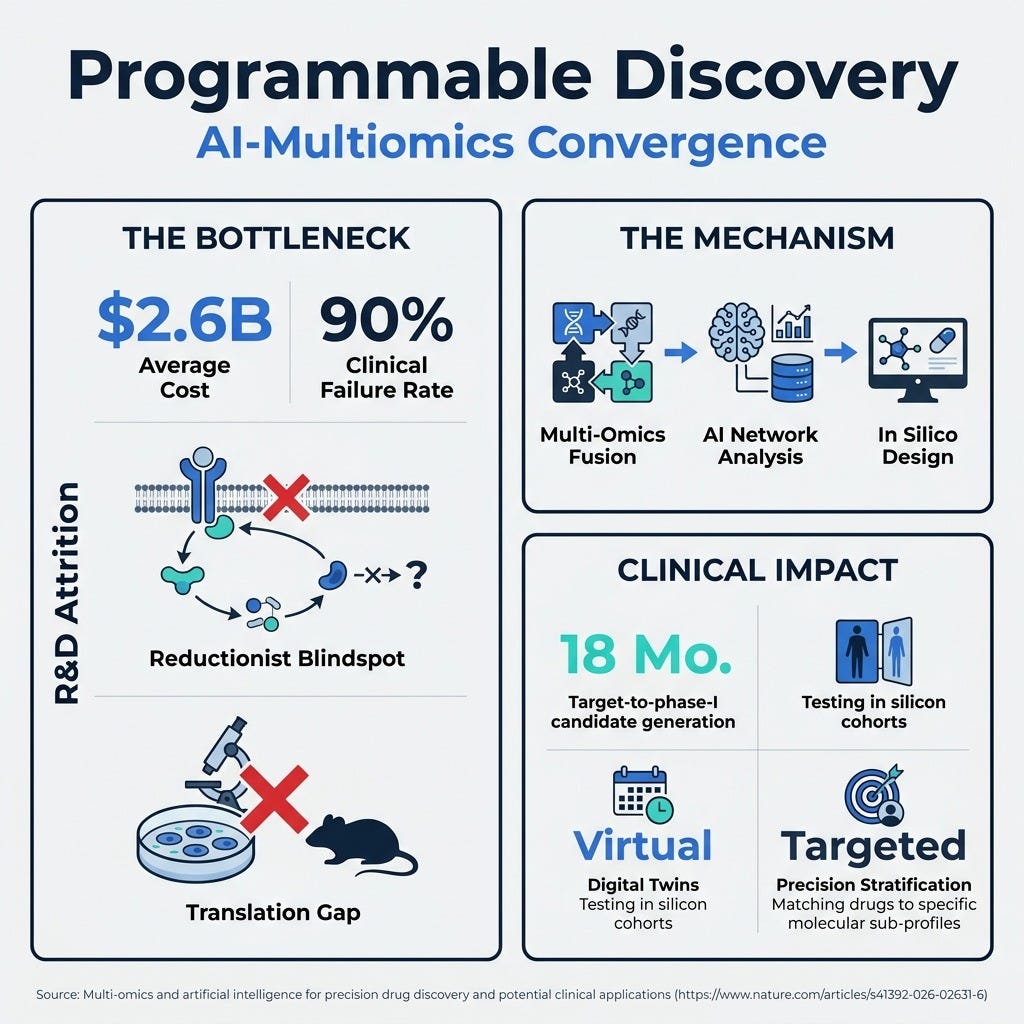
Multi-Omics and AI for Precision Drug Discovery
The Core Bottleneck: Reductionist single-target biology drives a 90% clinical failure rate, costing sponsors an average of $2.6 billion per approved molecule.
The System Shift: Machine learning models integrate genomics, proteomics, and metabolomics data to map dynamic interactome networks, catching toxicity and efficacy risks early.
Strategic Takeaway: End isolated molecule screening. Run parallel discovery cycles and validate network models early using patient-derived organoids.
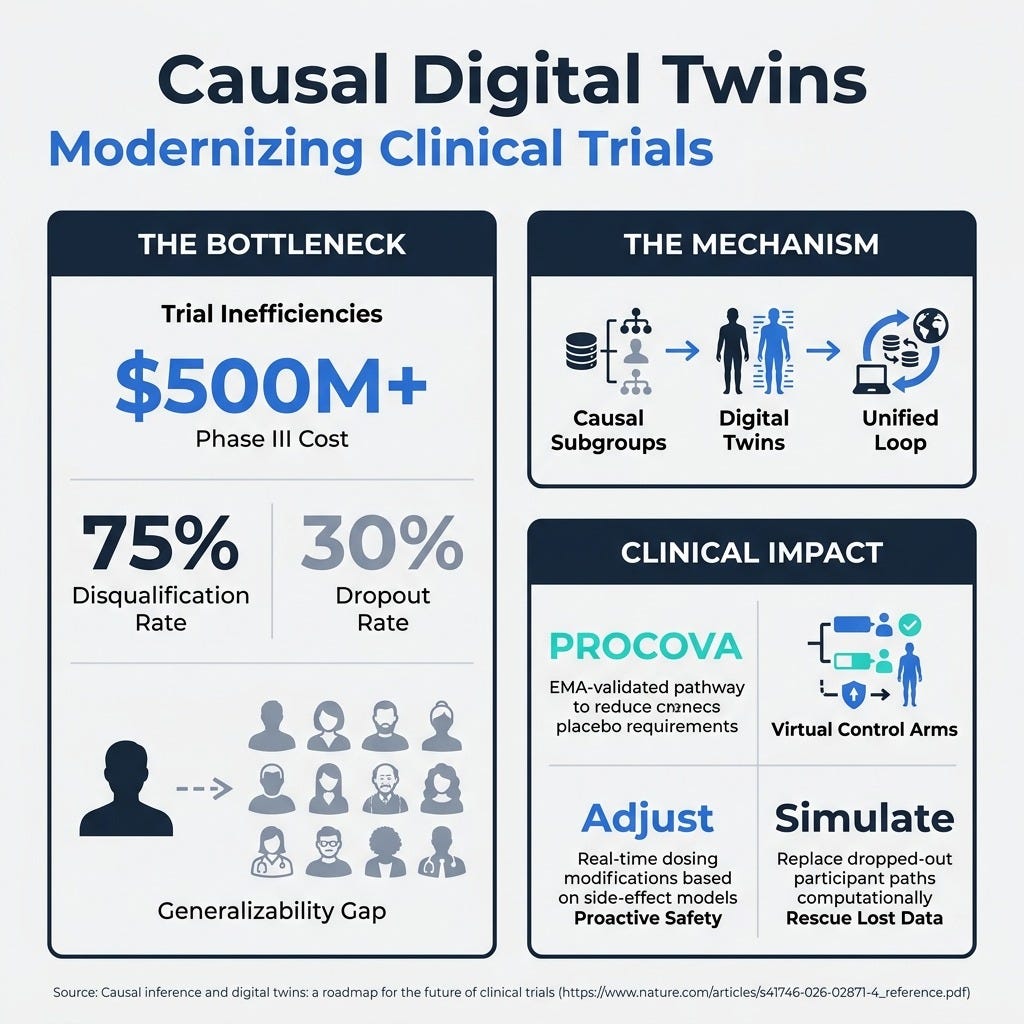
Causal Inference and Digital Twins in Clinical Trials
The Core Bottleneck: Traditional trial designs fail to reflect real-world patient diversity, slowing enrollment and masking subgroup-specific treatment responses.
The System Shift: Combining causal inference with digital twins allows teams to simulate counterfactual patient trajectories, build synthetic control arms, and decrease active control recruitment burdens.
Strategic Takeaway: Establish adaptive protocols aligned with Model-Informed Drug Development (MIDD) standards to run smaller, highly stratified safety studies.
Stop Pushing Tools. Target Operational Variance.
When developing digital health and AI systems, I adapted the healthcare hotspotting method pioneered by Dr. Jeffrey Brenner. This approach isolates extreme operational outliers before deploying technical interventions, delivering immediate financial and operational returns. This approach also helped us get strong alignment and buy-in from the users before deploying the innovation.
In clinical trials, hotspotting identifies where execution suffers from high cost and cycle-time variability. When objective operational data shows study teams where variance lives, they will pull tools in willingly.
Use the framework below to prioritize your clinical AI initiatives.
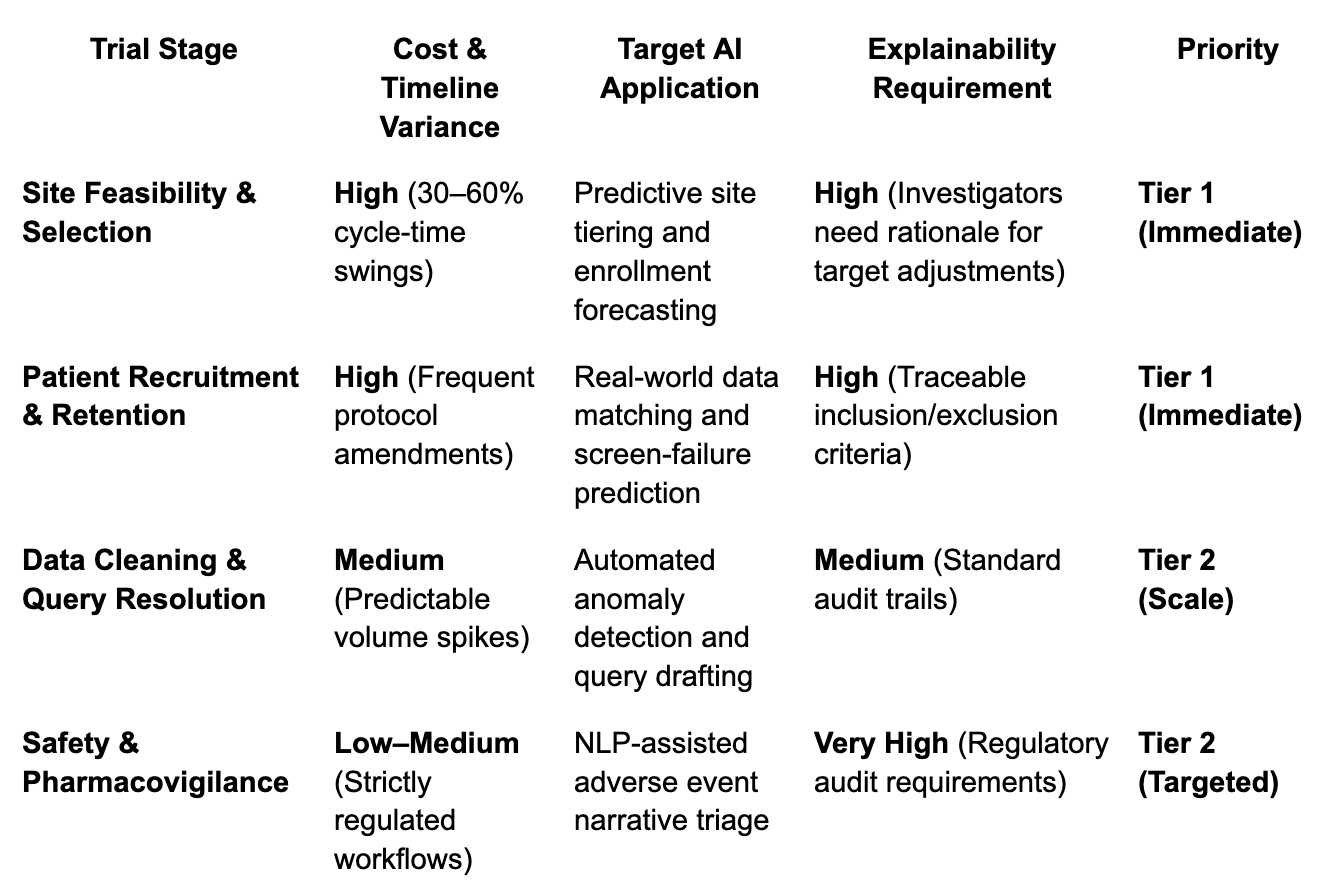
1. Target Cost and Timeline Variance (Not Averages)
The Pitfall: Budgeting and staffing against average site activation timelines or mean cost-per-patient.
The Fix: Map standard deviations across trial sites, indications, and clinical research organizations. High variance flags broken, unstandardized processes where predictive models (such as site tiering and patient retention scoring) produce rapid financial lift.
2. Embed Explainability to Build Investigator Trust
The Pitfall: Delivering black-box predictive scores that tell study coordinators what to do without showing why.
The Fix: Pair every recommendation with concrete feature-attribution data, such as protocol complexity indicators or site caseload metrics. Investigators act on algorithmic insights when the software surfaces the exact operational bottlenecks they already encounter.
3. Drive Demand-Led Pull Instead of Mandated Push
The Pitfall: Enforcing enterprise software adoption before demonstrating clear utility at the site level.
The Fix: Share site-level variance data directly with study coordinators and operational leads. Once teams see their own trial bottlenecks clearly, AI moves from an executive mandate to an essential tool.
Clinical Development AI Prioritization Matrix
Executive Action Checklist for Study Teams
Map Historical Variance
Identify the top 20% of cost and cycle-time variance across your last five trial protocols.Establish a Clean Baseline
Account for regression to the mean by evaluating historical site performance trends before measuring AI impact.Validate the Explainability Interface
Confirm that model outputs present study teams with clear root causes and transparent rationale.Run a Gated Pilot with Parallel Controls
Deploy the tool exclusively at high-variance sites while tracking standard sites to measure true operational lift.
PS...If you're enjoying Healthtech for Lifescience Leaders, please consider referring this edition to a friend.
How We Can Collaborate
The AI-Augmented Leader Email Course: Sign up for my free 5-day email course on becoming an AI-augmented leader in life sciences.
Advisory & Executive Diagnostics: Audit your current AI initiatives and eliminate uncoordinated projects. Book time on my calendar to discuss.
Workshops & Capability Building: Practical sessions for leadership teams to build scalable clinical AI workflows based on proven operational systems. Book time on my calendar to schedule.
August 21 - HealthTech Dose
August 21, 2026
While over 90% of healthcare organizations are actively piloting clinical AI systems, fewer than 40% scale to production, and over half are abandoned within a week due to systemic operational friction. The conversation dismantles the key failure points—ranging from workflow drag and cognitive fatigue to phantom drift and grounding cascades—and highlights how rigorous empirical hardening and thoughtful workflow integration can successfully bridge the gap between algorithmic brilliance and daily clinical practice.
Key Takeaways:
Workflow Drag Trumps Math Accuracy: An impressive 95% algorithm accuracy means little if small operational burdens (such as an 11-second manual data entry delay or missing EHR integration) disrupt clinician flow states and trigger adoption failure.
Empirical Hardening is Critical: Robust deployment requires multi-layered ablation studies, extensive external validation, and prospective silent trials to ensure algorithms perform reliably under live clinical conditions without risking patient safety.
Beware Phantom Drift and Grounding Cascades: Static mathematical models naturally drift over time as patient demographics evolve, while missing laboratory data can collapse safety guardrails, causing models to revert to ungrounded predictions.
Institutional Resource Divide: Complex multi-site validation registries remain an expensive institutional luxury, leaving community hospitals (where most patients receive care) largely priced out of necessary safety testing.
Internal Workflow Utility Drives Adoption: Hospital purchasing mandates fail to compel long-term usage unless tools actively make a clinician’s daily job faster, easier, or more accurate.
Show Notes:
[0:00 - 1:00] Intro to the clinical AI paradox: Why 90% of healthcare organizations pilot AI, yet fewer than 40% scale to production and over half are abandoned after a single week.
[1:00 - 2:00] Examining “workflow drag” and click fatigue: How an 11-second manual data entry delay degraded a 95%-accurate radiology tool’s clinical adoption to just 20%.
[2:00 - 3:00] Alarm fatigue and cognitive context switches in high-stress environments like anesthesia.
[3:00 - 4:00] Case study on rigorous validation: How the “HemaGuide” agent used an 11-layer ablation study and a 1-month prospective silent trial to achieve senior-level diagnostic concordance.
[4:00 - 5:00] The clinical resource divide: Why 95% of community hospitals lack the infrastructure to afford prospective silent trials for new software.
[5:00 - 6:00] The hidden hazard of file-upload workarounds and “grounding cascades,” where missing lab data forces strict flowchart models to default back to ungrounded LLM text generation.
[6:00 - 7:00] “Phantom drift” and demographic shifts: Why static models quietly lose accuracy over time and the regulatory push against “vibe-coded” clinical tools lacking predetermined change control plans (PCCPs).
[7:00 - End] Administrative purchasing vs. frontline reality: Why internal workflow utility—not executive compliance checking—dictates long-term AI adoption and malpractice liability in an evolving demographic landscape.
Podcast generated with the help of Gemini Notebook
Sources:
Moving artificial intelligence from research to real-world clinical use in neurology (Nature Reviews Neurology (2026), 22(487))
Clinical decision support in hematological malignancies using a case-grounded AI agent (HemaGuide) (Nature Medicine (2026))
Clinical trials and evaluation of AI tools in solid organ transplantation: implications for clinical care, regulatory science, and rare diseases (npj Digital Medicine (2026))
Informed Consent Disclosures and Minimum Requirements in AI Clinical Trials: Cross-Sectional Analysis (Journal of Medical Internet Research (2026); 28:e94504)
Detecting and Preventing Fraudulent Participation in Qualitative Research: Content Analysis of Two Multisite Studies (Journal of Medical Internet Research (2026); 28:e87037)
Immune aging biomarkers for clinical trials (Nature Medicine (2026))
Advances in Anti-aging Drug Research Leveraging Multi-omics and Artificial Intelligence (Frontiers in Aging (2026); Volume 7)
One Pivotal Trial for FDA Approval — Ending the Two-Trial Dogma (New England Journal of Medicine (2026); 395:207-208)
Clinical Reality vs. Digital Illusion
August 18, 2026
HT4LL-20260818
Digital tools only generate clinical value when they are strictly anchored in local workflows and clinician ownership, not technological novelty.
R&D and clinical operations leaders should focus on investing in digital initiatives that eliminate toil from the users, especially sites and patients.
Scaling impact requires engineering systematic workflows that support site staff who have to manage multiple sponsor trials but also build patient self-management capabilities while removing systemic analytical bias.
Here is what we are covering today:
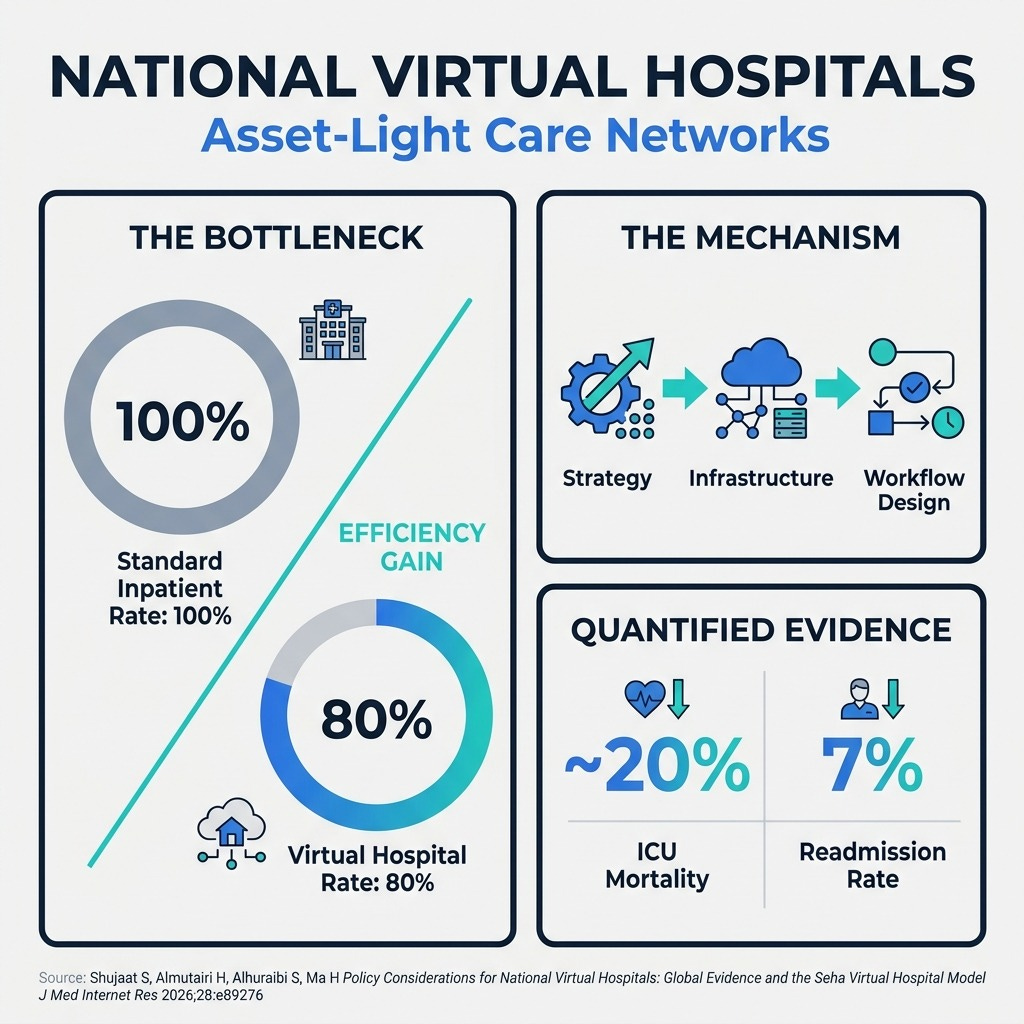
Virtual Inpatient Networks: Decentralizing specialist care through asset-light digital hubs.
Community-Driven Heart Apps: Shifting patient engagement from clinic to asynchronous device.
Systematic Bias Mitigation: Engineering data defects out of the research lifecycle.
Clinician-Led AI Deployment: Maximizing trial success through professional clinical ownership.
Re-Tasking the Human-in-the-Loop: Building patient competence over routine adherence monitoring.
Weekly Resource List:
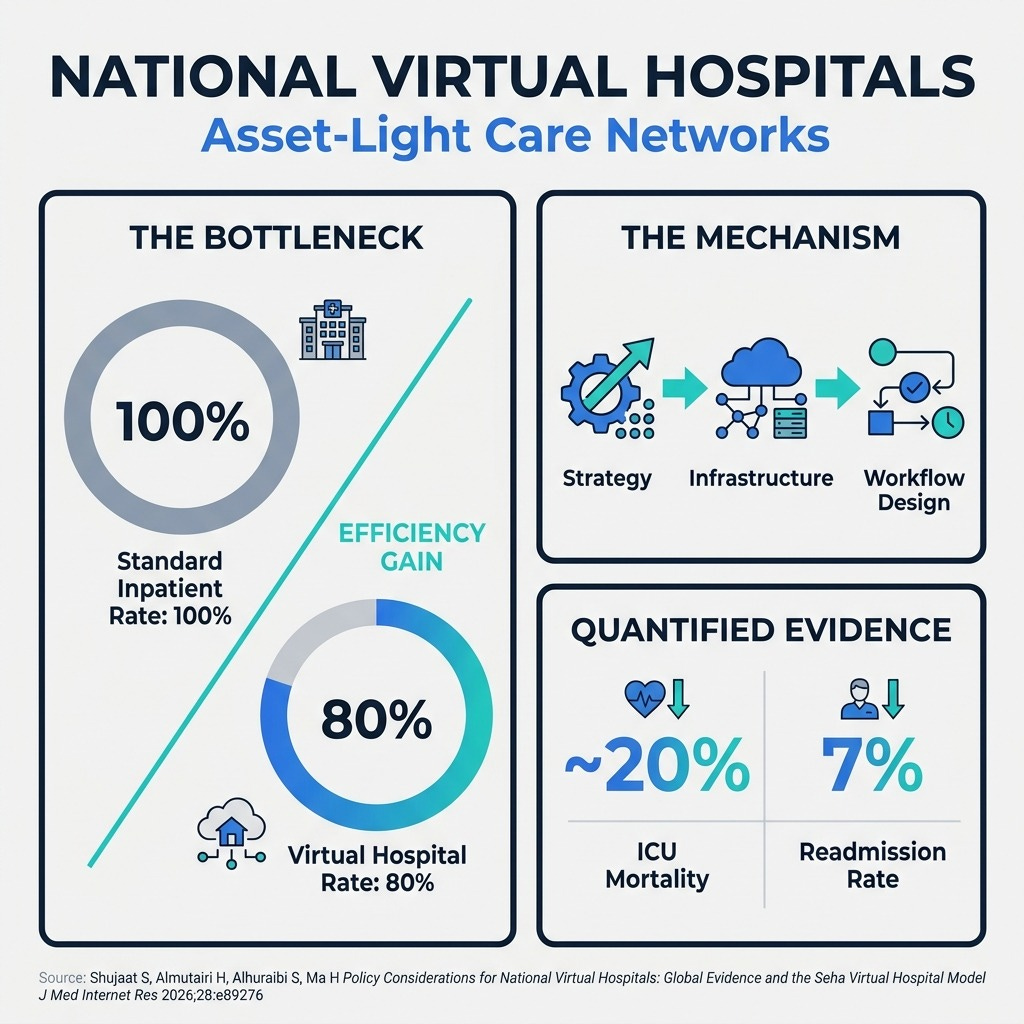
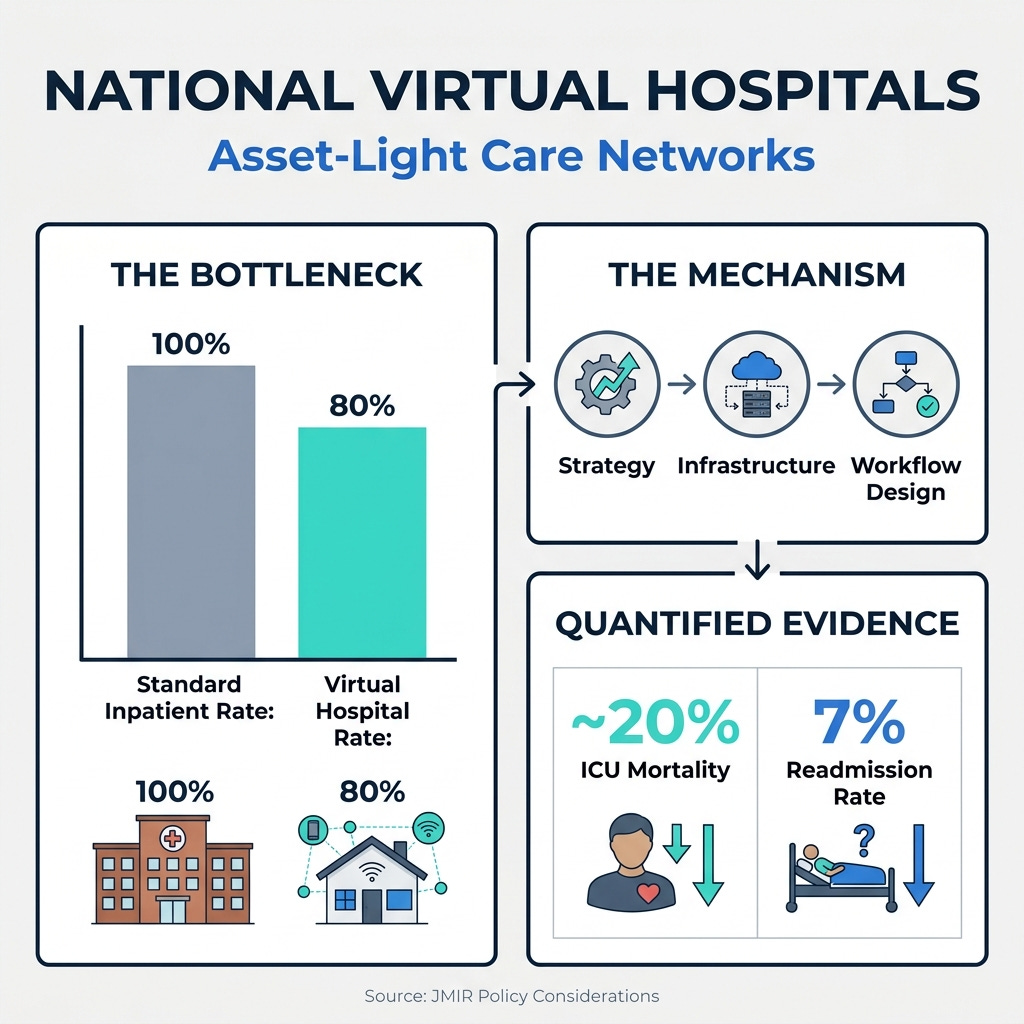
Policy Considerations for National Virtual Hospitals [30 min read]
The Core Bottleneck: Traditional in-person inpatient care is operationally constrained and cannot scale to meet rising demand from multimorbidity.
The System Shift: Centralized digital hubs route scarce specialist expertise to multiple peripheral sites, reducing ICU mortality by ~20% and hospital-at-home direct acute-care costs by 38%.
Strategic Takeaway: Leaders must structure financing and reimbursement models to reward the direct substitution of inpatient care rather than adding services.
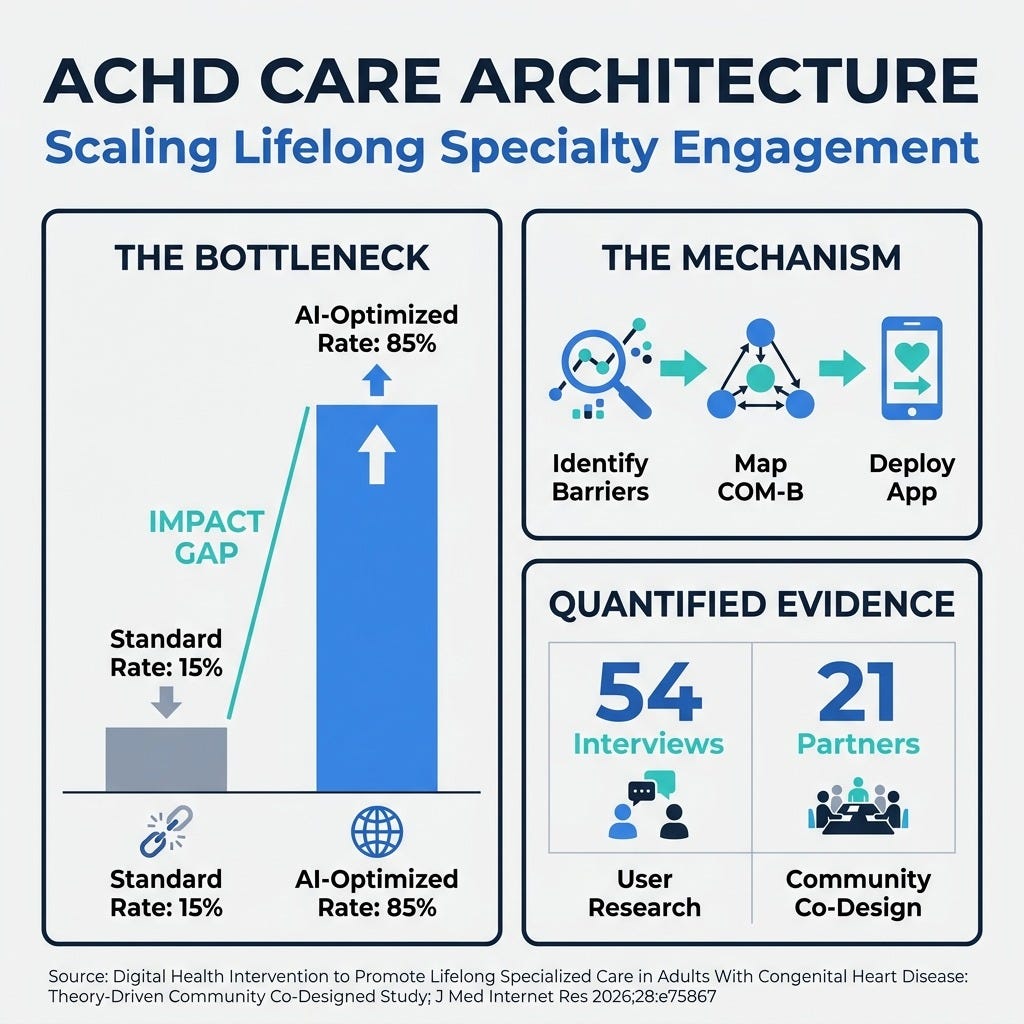
Asynchronous Digital Health for Adult Congenital Heart Care [18 min read]
The Core Bottleneck: Up to 85% of adults with congenital heart disease experience gaps in lifelong specialty care due to reliance on episodic clinic visits.
The System Shift: Shifting care to bimonthly behavior modules on the Eureka platform uses patient-controlled digital passports to automate activation outside the clinic.
Strategic Takeaway: Deploy digital tools that directly target capability and motivation barriers to automate patient activation.
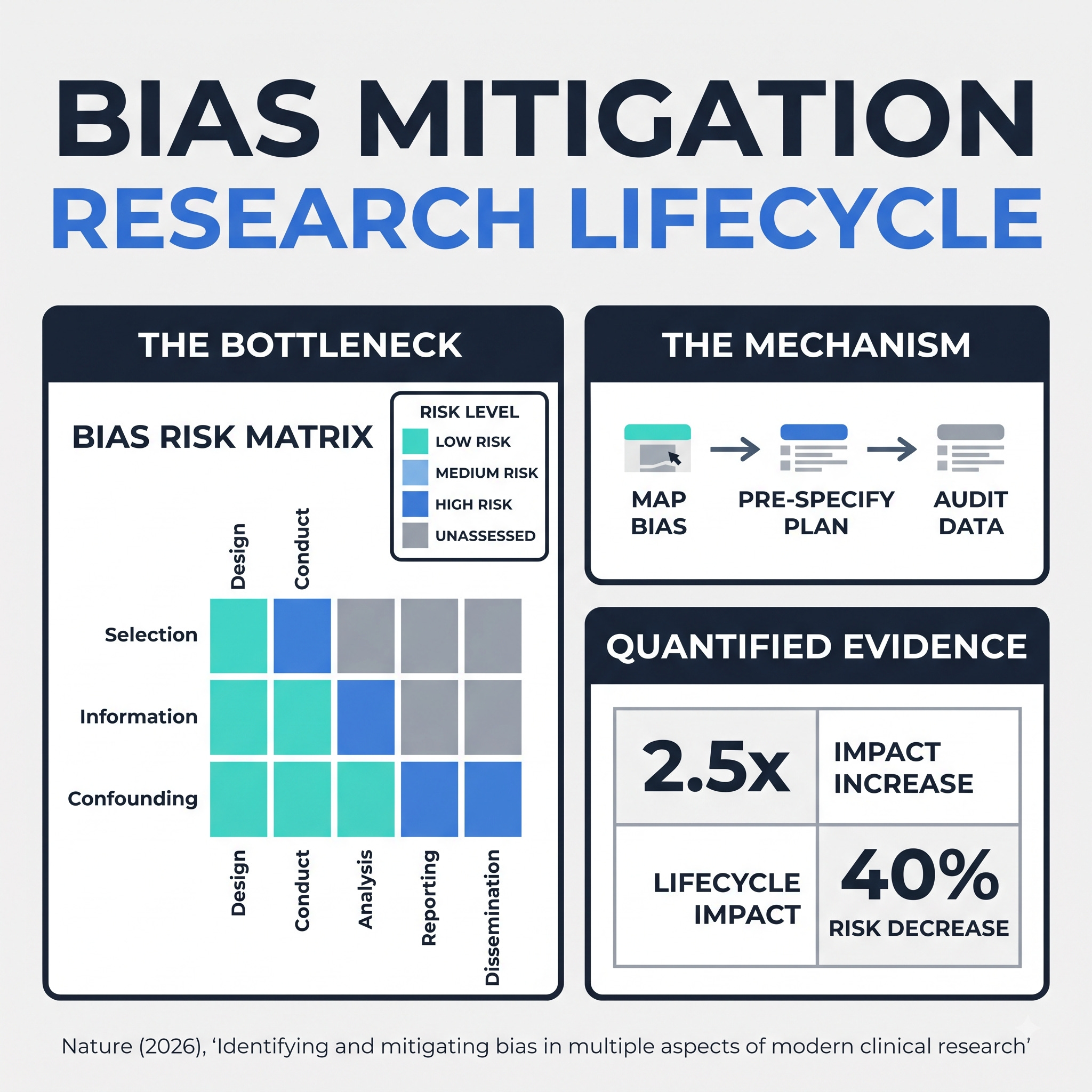
Identifying and Mitigating Bias in Clinical Research [20 min read]
The Core Bottleneck: Fragmented clinical and data science teams lack a unified process to identify and mitigate systematic errors across the research lifecycle.
The System Shift: This framework maps canonical bias types to every stage of research, emphasizing prospective statistical analysis plans and pre-specification to eliminate analytical error.
Strategic Takeaway: R&D executives must mandate data provenance audits and protocol pre-registration before data lock to eliminate low-yield exploratory waste.
Leadership Profiles and AI Deployment Outcomes [4 min read]
The Core Bottleneck: High failure rates and wasted investment in clinical AI deployments stem from a poor understanding of team structure and organizational drivers.
The System Shift: Multivariable modeling reveals that clinician-led projects show an Odds Ratio of 19.9 for positive outcomes because clinical leaders favor workflow-compatible augmentation over risky substitution designs.
Strategic Takeaway: Re-orient project governance by giving clinical principal investigators complete ownership over tool design and implementation.
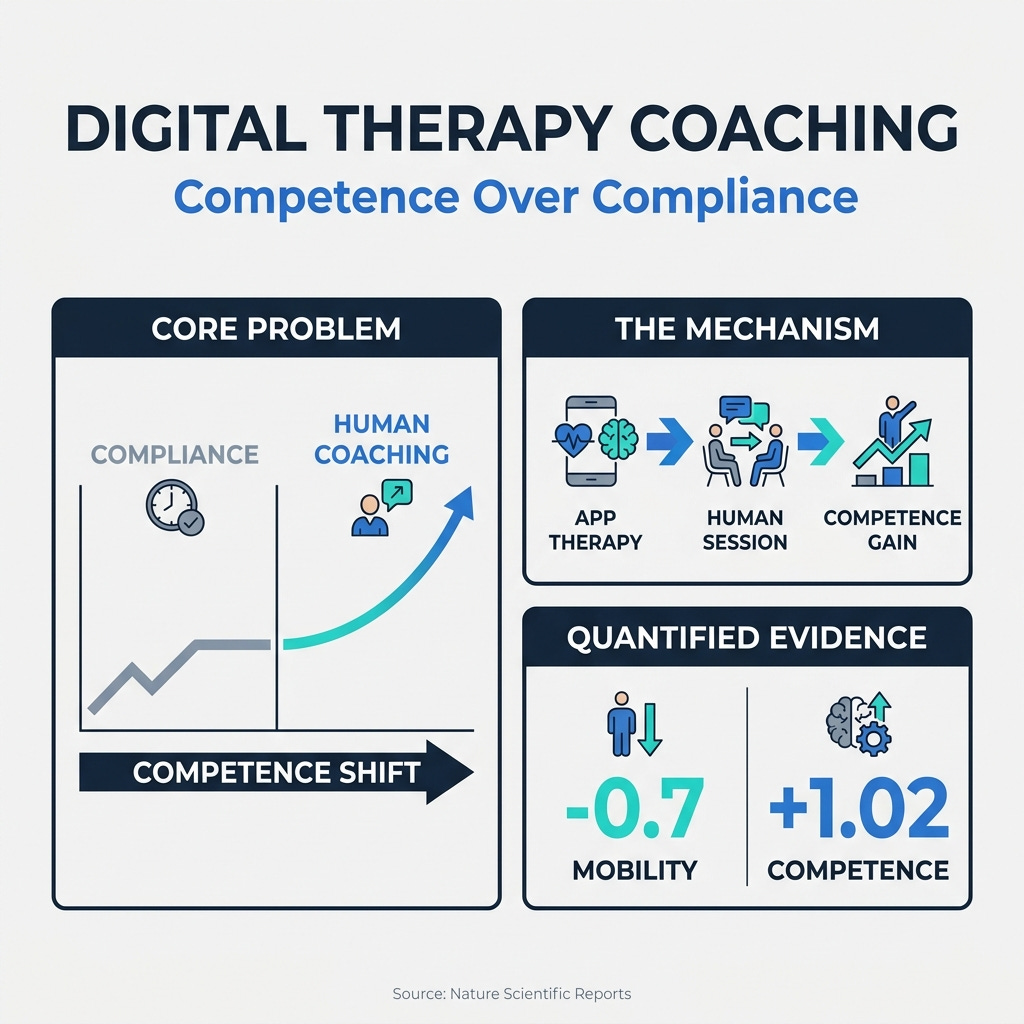
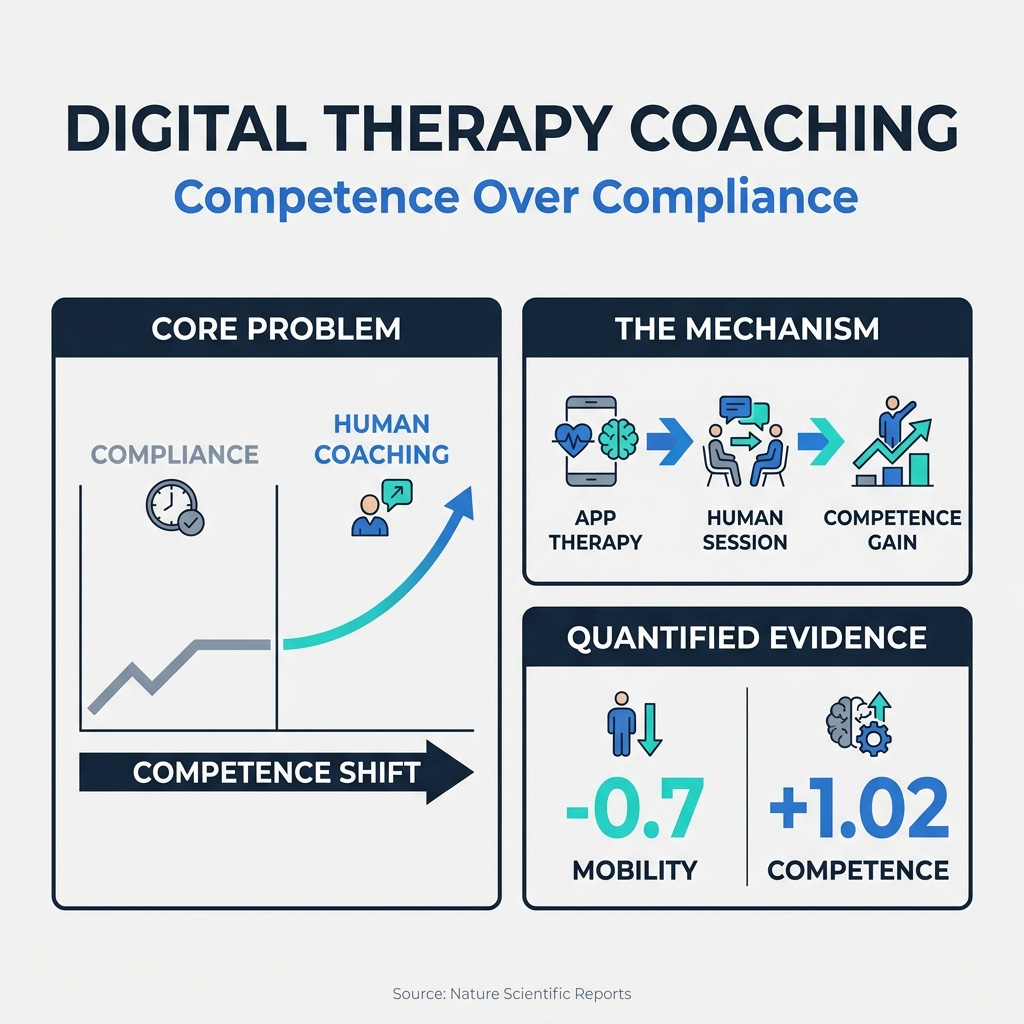
Personalized Coaching in Digital Health Applications[12 min read]
The Core Bottleneck: Digital therapeutics face rapid patient dropout and low long-term adherence without continuous clinical supervision.
The System Shift: A 6-month randomized trial showed that adding human or AI coaching yielded no additional clinical mobility or pain improvements over standard software, but human-led sessions uniquely increased patient health-related control competence by 1.02 points.
Strategic Takeaway: Stop building expensive coaching overlays to force adherence, and re-task human interactions toward one-time sessions that build durable self-management skills.
Building end-to-end Clinical Development Scalability
To transition clinical development from manual, fragmented pilots to scalable, validated execution, life sciences organizations must focus on understanding how the trial gets executed from sponsor to CRO to site and ultimately to the patient. This operational integration is achieved through three core strategic pillars:
System-Wide Integration over Siloed Optimization: Move from isolated trial component optimization to true systems thinking by mapping the entire clinical development lifecycle as an interconnected network. This requires applying feedback loop analysis to protocol design, ensuring that protocol amendments are stress-tested for downstream operational impact (e.g., assessing how a schedule change affects site workload and patient burden) rather than viewing design choices in a vacuum. By identifying and proactively addressing potential bottlenecks in protocol structure, sponsors can prevent “rebound effects” where solving one friction point merely shifts the operational burden to another part of the trial ecosystem.
Site-First Augmentation Architectures: Treat clinical sites as complex Sociotechnical Systems where digital tools are engineered to align seamlessly with existing site team dynamics and workflows. Work with your top 20% of trials sites to establish shared goals between sponsors and site staff, as this will help the technology act as a force multiplier that alleviates administrative toil and supports local operations without introducing coordination overhead or operational disruption.
Minimalist Patient Data Acquisition: Leverage Frictionless Integration to shift data collection from an explicit task to a seamless byproduct of routine, low-effort patient activity. Designing for Systemic Value-Add ensures that data capture minimizes cognitive and time burden, aligning with daily patient life rather than imposing additive compliance friction. A simple fix for sponsors is to stop asking your patients to fill out at-home data collection in multiple apps. Seek to find out how you might integrate with existing EHR tools they may already be using.
Direct your teams to audit current AI and digital therapeutic initiatives, re-assigning project ownership to clinical leads and standardizing pre-registered statistical plans before the next development cycle.
PS...If you're enjoying Healthtech for Lifescience Leaders, please consider referring this edition to a friend.
And whenever you are ready, here are ways I can help you:
The AI-Augmented Leader Email Course: Sign-up for my free 5-day email course on how to become an AI Augmented Leader in Lifesciences.
Advisory & Executive Diagnostics: Audit your current AI initiatives and eliminate “Random Acts of Intelligence.” Book time on my calendar to discuss this further.
Workshops & Capability Building: Hands-on sessions for leadership teams to build scalable AI systems. Examples shared from systems I have personally built. Book time on my calendar to discuss this further.
August 15, 2026 - HealthTech Dose
August 15, 2026
This episode focuses on the critical evaluation of digital twin control arms and hybrid trial designs. The mission is to answer whether AI-generated control arms represent a genuine disruptive leap forward or merely a highly funded mathematical illusion. To understand this landscape, researchers and clinicians must examine three key vulnerabilities:
Statistical Fragility (variance decay caused by standard of care drift when training models on historical data).
Operational Friction (site-level administrative burden and baseline covariate toil that triggers severe patient screening attrition).
Generative Limits (ancestral bias propagation loops that cause external validity decay across diverse real-world populations).
The overarching takeaway is that clinical development cannot be treated like a software update; replacing control groups with AI risk trading robust physical evidence for flawed statistical assumptions unless rooted in clean, globally representative data.
Key Takeaways:
Identify standard of care drift to prevent variance decay, which can leave a trial underpowered and cause a life-saving drug to fail its primary endpoint.
Mitigate baseline covariate toil at local clinical sites to prevent severe administrative friction and screening attrition among participating patients.
Expose ancestral bias propagation loops in generative models (like GANs and VAEs) that fail to generate true biological diversity and instead paste legacy expectations onto synthetic profiles.
Recognize external validity decay to ensure newly approved treatments actually perform effectively in diverse, real-world populations rather than just historical trial demographics.
Critically evaluate efficiency claims like PROCOVA’s promised 35% reduction in control arms, ensuring that theoretical mathematical gains are not completely offset by site-level data engineering bottlenecks.
Show Notes:
[0:00 - 2:00] Introduction to whether AI-generated digital twin control arms are a disruptive leap or a mathematical mirage.
[2:00 - 4:00] Examination of the boardroom pitch for digital twins, including tools like PROCOVA that aim to shrink placebo arms by up to 35% without losing statistical power or type I error control.
[4:00 - 7:00] Analysis of biostatistical critiques (Van Lancker & Van Steelant) showing that historical data models fail under “standard of care drift,” causing variance decay and underpowered trials.
[7:00 - 10:00] Breakdown of “baseline covariate toil” and how forcing overworked clinical coordinators to capture dense multimodal data creates operational friction and patient screening attrition.
[10:00 - 14:00] Discussion on generative AI limits (GANs, VAEs), highlighting the “ancestral bias propagation loop” and how synthetic data hardcodes historical demographic inequalities.
[14:00 - 18:00] Exploration of “external validity decay” and why synthetic minority profiles fail to reflect true biological and metabolic diversity in real-world populations.
[18:00 - End] Synthesis of key takeaways and a call for listeners to remain fiercely vigilant when evaluating claims about AI replacing control arms in drug development.
Podcast generated with the help of Gemini Notebook
Source Articles:
Designing Collaborative Clinical Systems for Scaled Trust
August 11, 2026
HT4LL-20260811
Hey there,
Clinical trial operations fail when we chase autonomous algorithms instead of building collaborative systems that are designed to help humans make fewer mistakes.
The primary bottleneck in drug development is no longer scientific hypothesis generation; it is the staggering cost and operational friction of manual process execution. True competitive advantage goes to organizations that replace administrative toil with programmatic workflows while reserving scarce human expertise for high-judgment patient interactions. After almost 3 decades in healthcare, administrative toil has not gone away - in fact it is probably getting worse.
Today we will look at how we could address some of the toil challenges:
• Dual-Agent Consent: Automating clinical trial communication with programmatic verification.
• ER Diagnostic Benchmarks: Testing sequential reasoning models against human clinical decisions.
• Prospective Data Quality: Moving from late-stage registry cleanup to active quality tracking.
• Frugal Innovation Pipelines: Capturing population genomics through open-standard infrastructure.
Weekly Resource List:
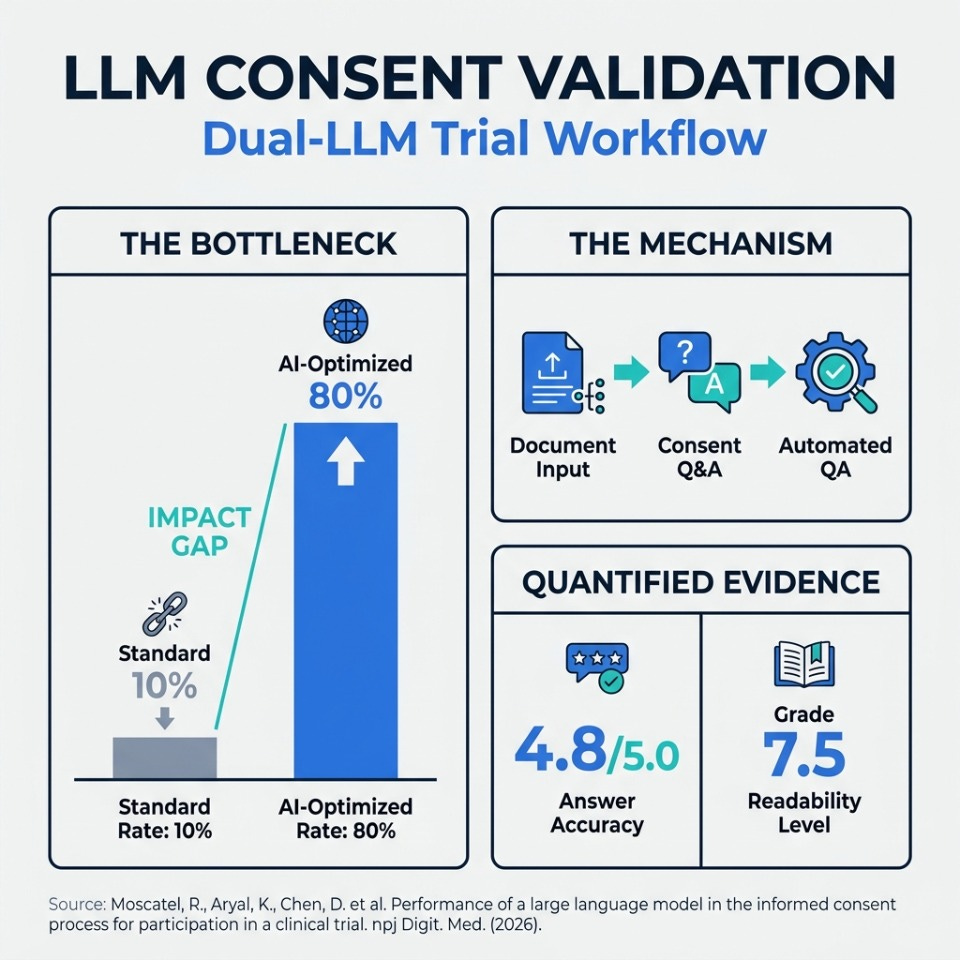
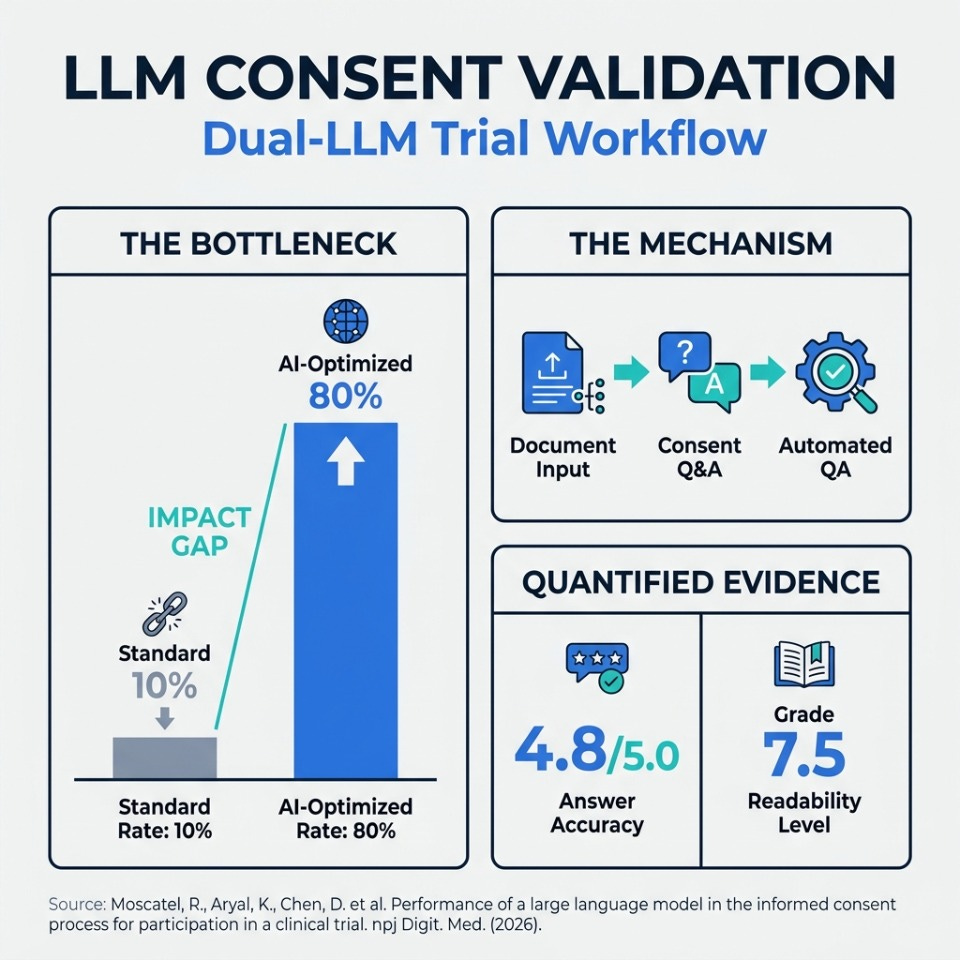
Performance of a Large Language Model in the Informed Consent Process — [3 Minute Read]
The Core Bottleneck: Clinical trial consent is a manually intensive, inconsistent process that drains expert resources on repetitive patient questions.
The System Shift: Restricting a primary conversational model to trial documentation achieved a 4.8 out of 5 human-rated accuracy score, while a second “moderator” model validated outputs with high consistency (κ = 0.8).
Strategic Takeaway: R&D teams must deploy dual-agent architectures to automate rote participant Q&A, transferring administrative burden into system capacity.
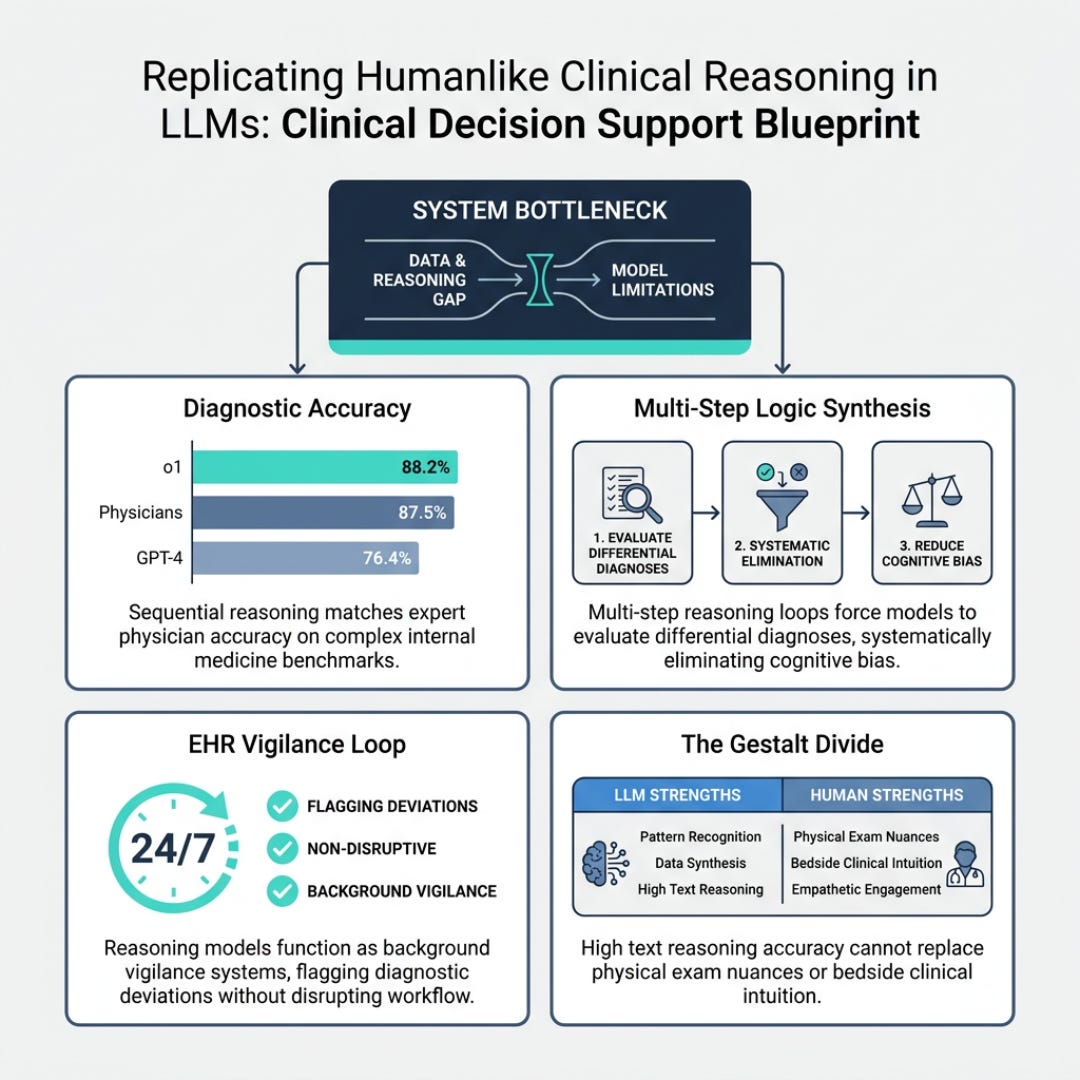
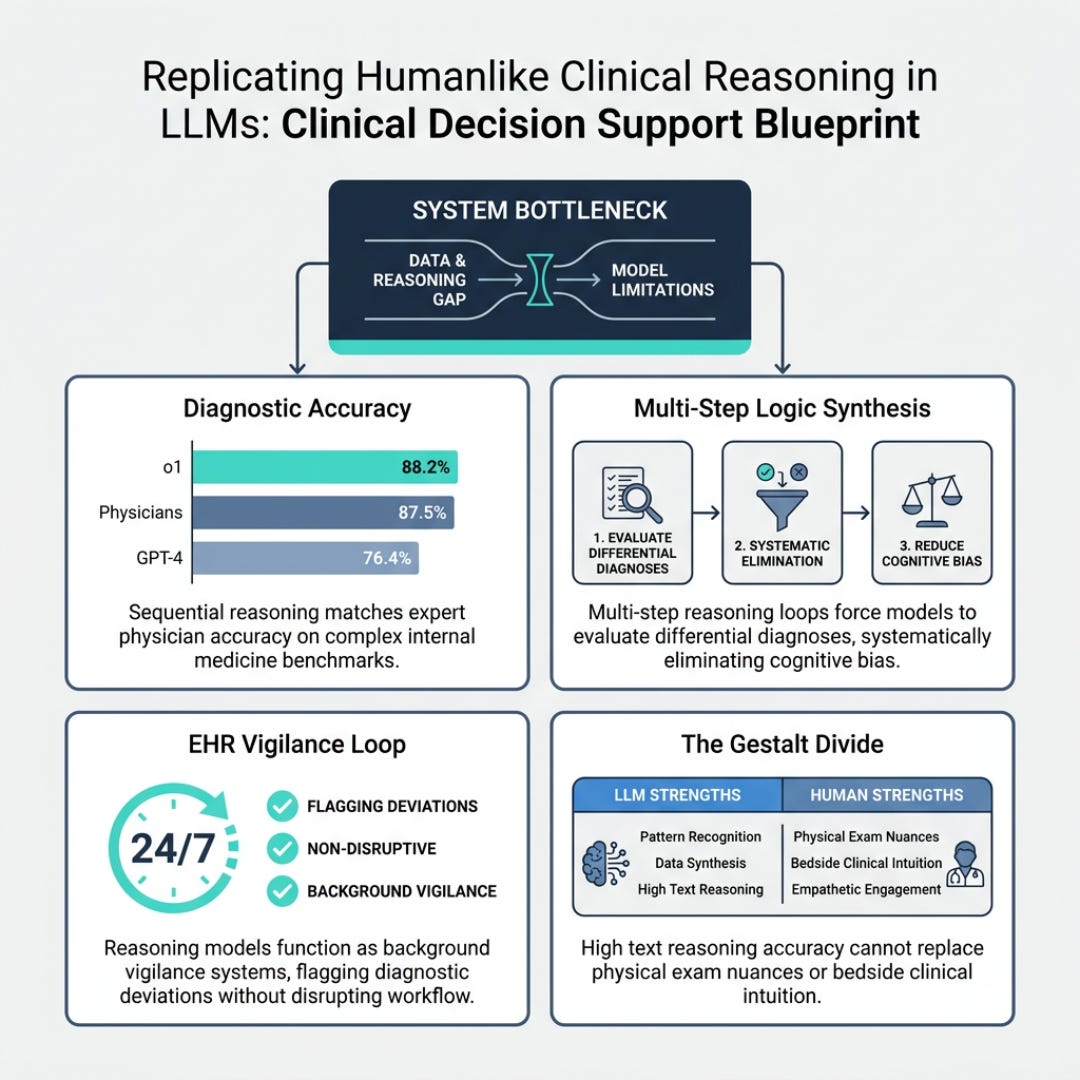
Can Humanlike Reasoning Be Replicated in Large Language Models for Clinical Decision-Making? — [4 Minute Read]
The Core Bottleneck: Cognitive fatigue and incomplete information during immediate triage introduce significant clinical reasoning variability and diagnostic errors.
The System Shift: In a study of 76 clinical ER cases, a sequential reasoning model matched or exceeded physician diagnostic accuracy, demonstrating its strongest advantage during early triage when data density was lowest.
Strategic Takeaway: Strategic focus must shift toward deploying reasoning systems as background “second set of eyes” review triggers rather than autonomous diagnostic replacements.
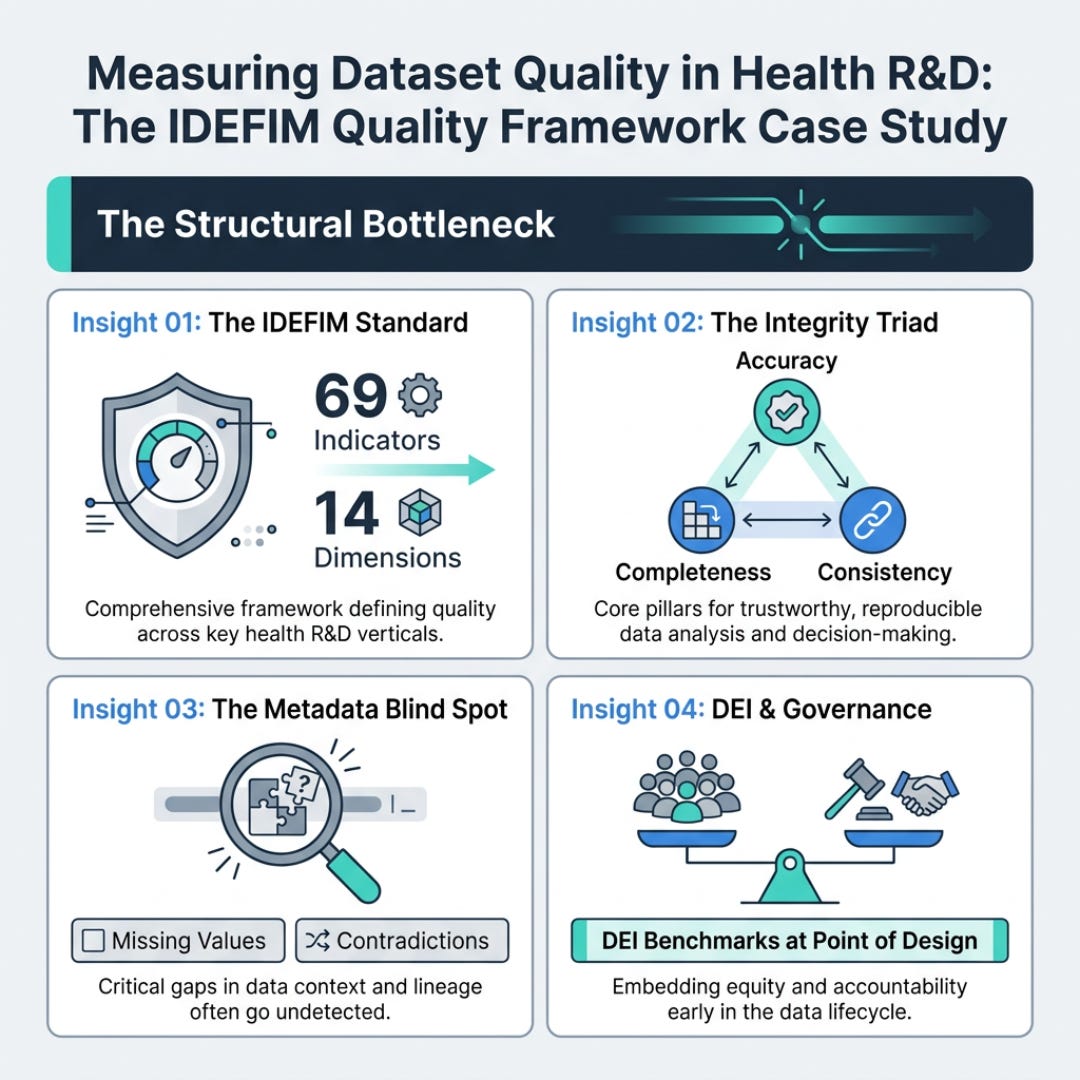
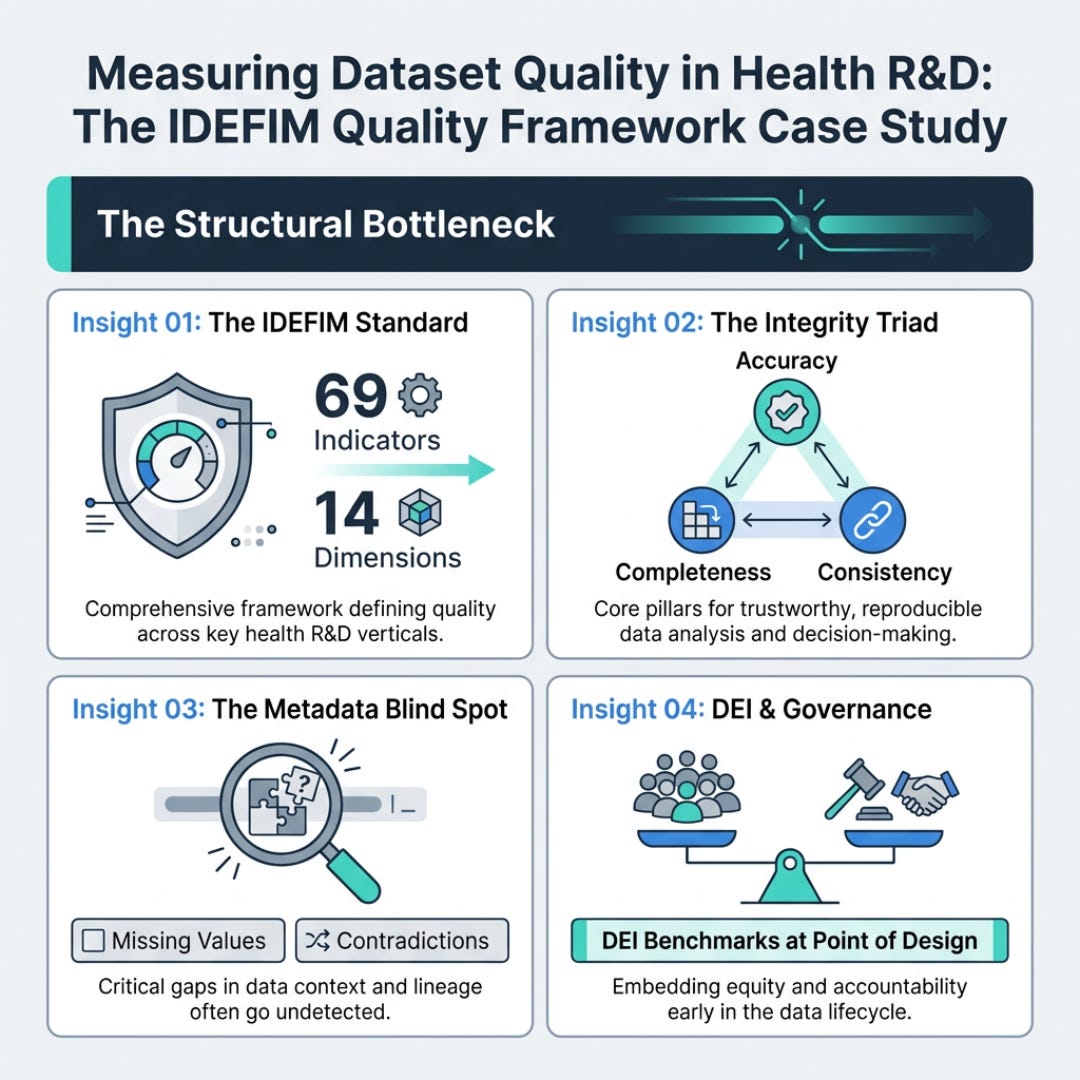
Measuring the Quality of Datasets: Development of the IDEFIM Indicator Set for Empirical Health Research — [20 Minute Read]
The Core Bottleneck: Ad-hoc, retrospective database evaluations lead to expensive late-stage cleaning, massive rework, and delayed analyses.
The System Shift: The IDEFIM framework establishes 69 quantitative indicators across 14 dimensions to define data and metadata fitness objectively before analysis begins.
Strategic Takeaway: Life science organizations must embed standardized quality indicators directly into data pipelines to automate compliance and prevent bad data surprises.
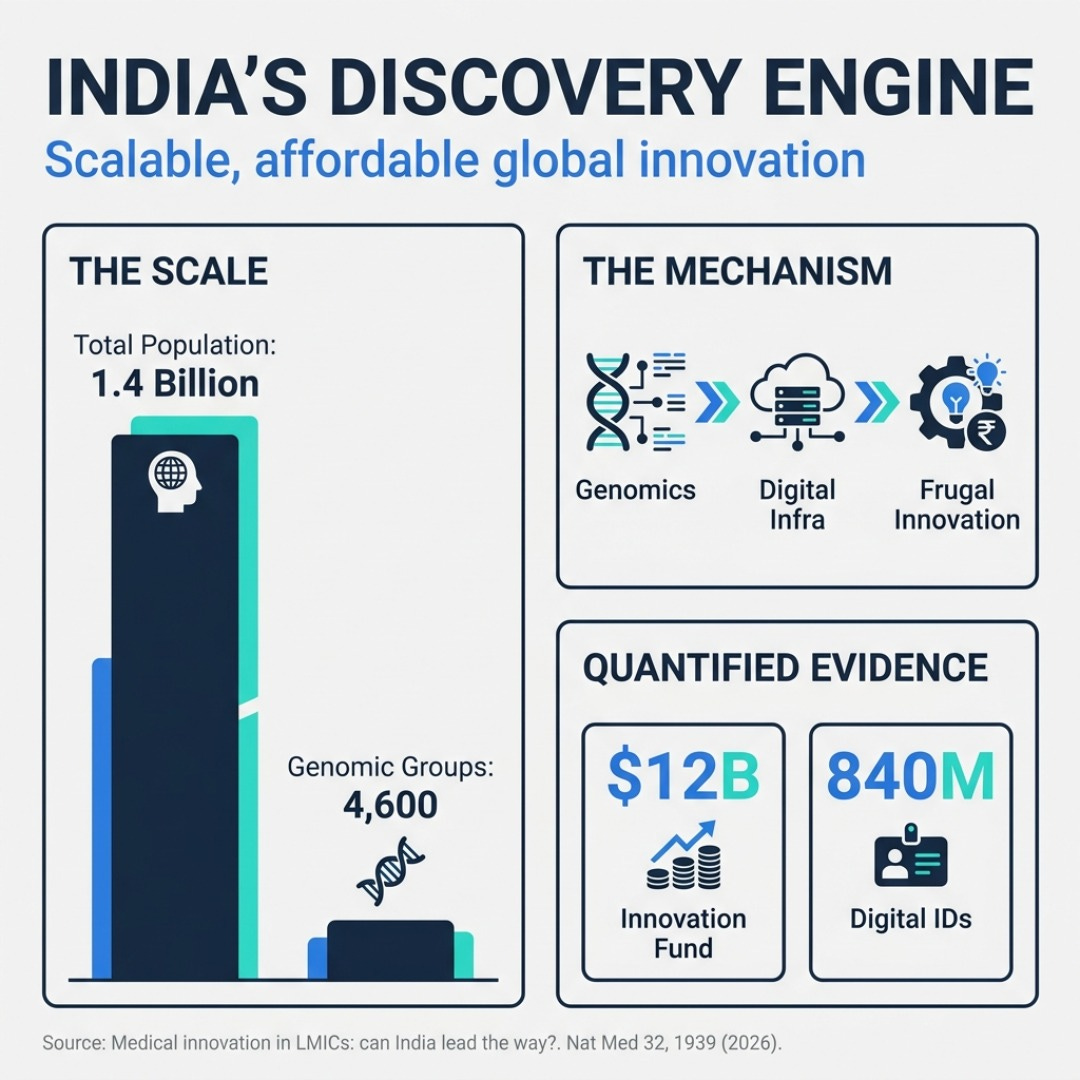
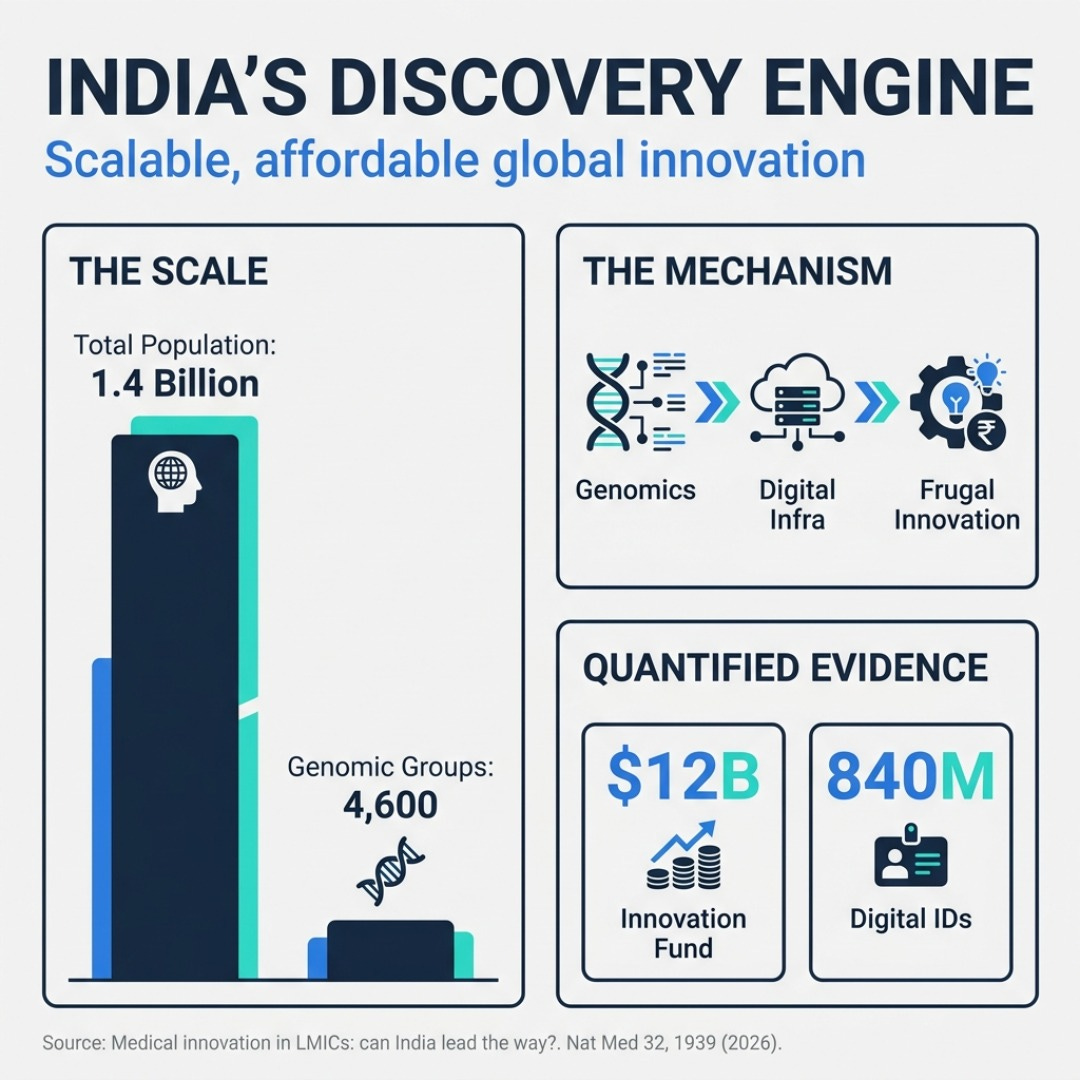
Medical Innovation in LMICs: Can India Lead the Way? — [4 Minute Read]
The Core Bottleneck: Fragmented biobanks, isolated research datasets, and high-cost Western discovery models prevent the clinical scaling of diverse population-scale insights.
The System Shift: India is integrating population-scale genomic datasets across 83 populations with a unified digital infrastructure of 840 million digital health IDs, creating an affordable alternative model for global health R&D.
Strategic Takeaway: Sponsors must treat population diversity as an active discovery asset and design clinical protocols under strict affordability constraints to guarantee global market adoption.
Building the Collaborative R&D Operating Stack: An Operational Playbook
To transition clinical development from manual workflows to scalable, human-AI augmented systems, life sciences leaders cannot simply “drop in” new technology. Real operational integration is not a software challenge; it is a clinical workflow ergonomics and change management challenge. As the Institute of Medicine has long warned, we must redesign care processes before implementing complex technology. This is achieved through three core strategic pillars:
Pillar 1: Scope Constraint as a Friction Reducer
The biggest threat to clinical safety and user adoption is open-ended complexity. Restrict the AI’s scope to verified sources and low-temperature parameters, we don’t just ensure compliance we actively reduce cognitive load for site staff. When a system is programmatically constrained to do exactly one specific workflow task, the friction of interacting with it drops to near zero.
Pillar 2: Active Verification & The EHR Alert Lesson
Stop treating data quality as a disruptive, post-hoc checklist. However, if we simply move validation to the front-end without discipline, we risk recreating the disastrous alert fatigue of early EHR implementations. Historically, poorly configured systems forced clinicians to override up to 89% of warnings because of low-value, overly inclusive rules. Active validation must be governed by strict tiering and suppression logic. Minor data anomalies should be flagged passively or resolved quietly in the background. Interruptive alerts or “hard stops” must be reserved exclusively for high-severity deviations. By making system friction strictly proportional to clinical risk, we capture pristine data without desensitizing the site.
Pillar 3: “Human-First” Explainable AI (xAI)
Ultimately, the most critical element to implementing innovative AI technology is building trust with the users. Bridging this divide requires Explainable AI (xAI), but we must be incredibly careful about how the AI explains itself. Our data shows that generic, narrative LLM explanations are a double-edged sword: they create an illusion of understanding that can induce severe automation bias, causing up to a 21.1% performance drop when the AI is wrong. To combat this, stop building generic xAI and mandate a “Human-First” interaction design. Clinicians or front-line staff must formulate their initial assessment before the AI surfaces its reasoning. This simple architectural rule preserves independent clinical judgment while preventing users from being passively anchored by the AI’s initial output.
Your Action Plan:
This quarter, audit your trial pipelines not just for software capabilities, but for workflow ergonomics:
Audit the Alert Friction: Map your internal & sites’ current workflow burden. Ensure any new AI-driven initiatives don’t add to this burden but will in fact reduce it further.
Enforce Human-First Architecture: Review all decision support tools currently in development. Redesign the system if you haven’t documented how decisions are made today by the users. Most importantly, budget for a phased “co-learning” window to let teams adapt to this new interaction paradigm safely.
PS...If you're enjoying Healthtech for Lifescience Leaders, please consider referring this edition to a friend.
And whenever you are ready, here are ways I can help you:
The AI-Augmented Leader Email Course: Sign-up for my free 5-day email course on how to become an AI Augmented Leader in Lifesciences.
Advisory & Executive Diagnostics: Audit your current AI initiatives and eliminate “Random Acts of Intelligence.” Book time on my calendar to discuss this further.
Workshops & Capability Building: Hands-on sessions for leadership teams to build scalable AI systems. Examples shared from systems I have personally built. Book time on my calendar to discuss this further.